

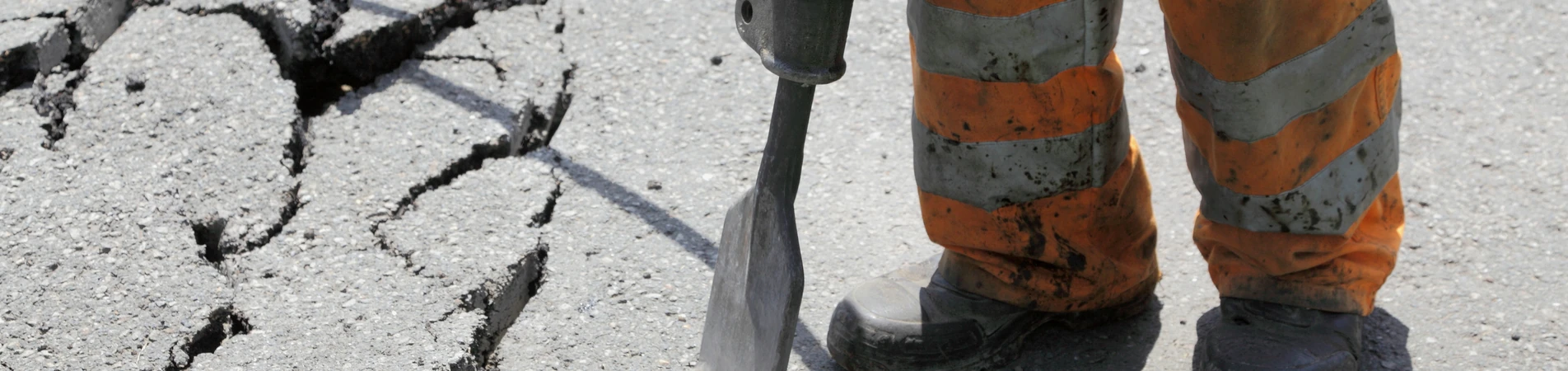
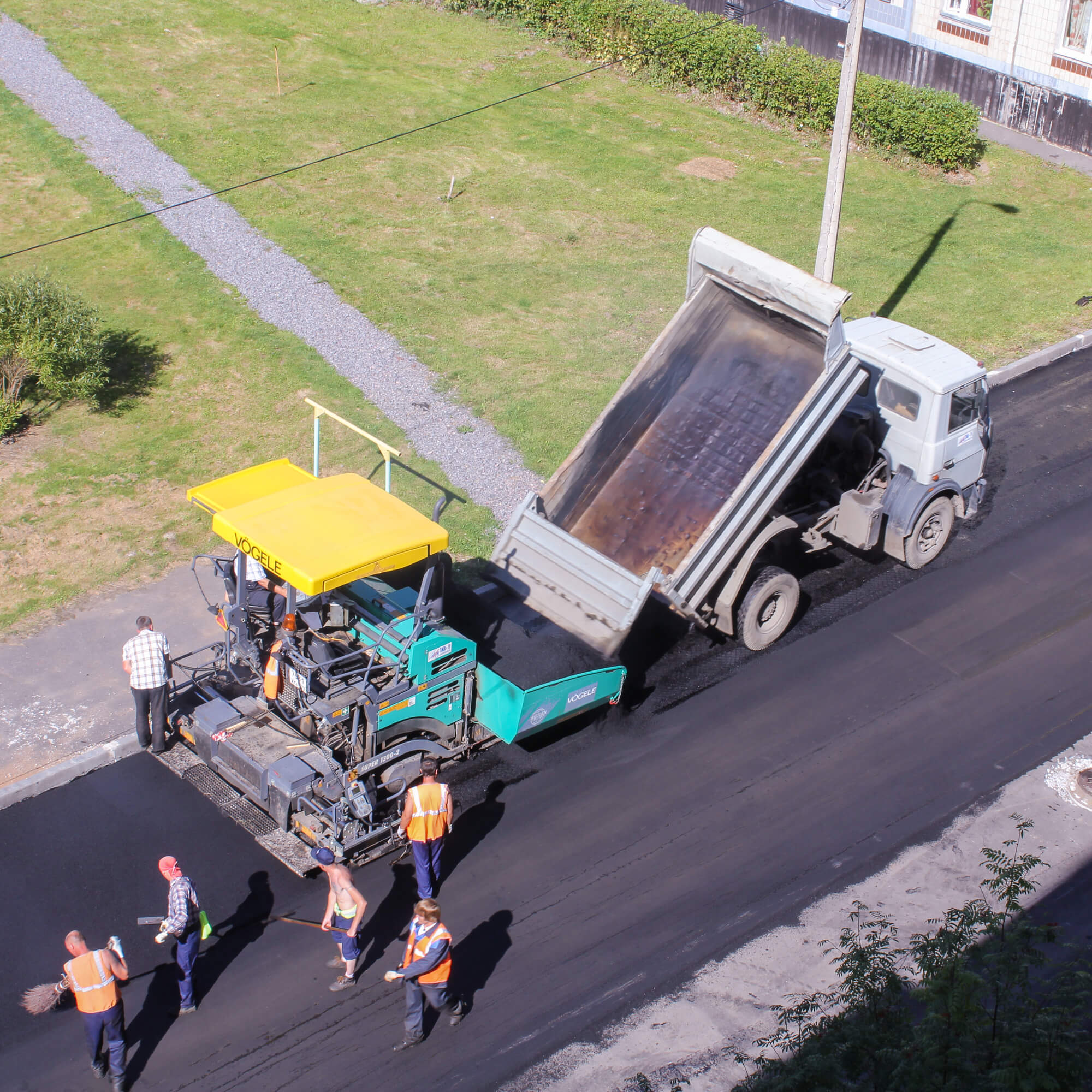
Subsidence is the slow drop in ground level that follows when wet organic soil is drained. Much of Metairie sits on drained marsh muck, and the USDA expects that ground to keep losing height, which helps explain why driveways here dip, crack and hold water.
The USDA’s soil survey maps about 60 percent of the land inside Metairie’s Census boundary as drained muck, a soil made largely of old marsh plant remains. That is a different problem from the clay found in much of the rest of the parish.
Muck loses volume once it is drained, and it keeps losing it slowly for years. A driveway laid on top goes down with it, and rarely at the same rate from one end to the other.
At TurnKey Asphalt, we treat a sinking driveway as a question about the ground first and the asphalt second.
If your driveway already has a dip that holds water, contact us and we will tell you whether it can be repaired or needs its base rebuilt.
This guide sets out what the federal soil, rainfall and housing data say about Metairie, how much the ground can settle, and what a sinking driveway actually needs.
What Is Under a Metairie Driveway?
We ran the USDA’s soil survey for Jefferson Parish against the Census Bureau’s boundary for Metairie. Two soils cover most of the land, and both are muck.
Kenner muck, drained covers about 38 percent of the land area. The USDA describes the Kenner series as very deep, very poorly drained organic soils that formed in herbaceous plant remains layered with clayey river sediment.
Allemands muck, drained covers about 21 percent more. It formed in decomposed plant material over older river deposits, and its upper layers are organic in the same way.
Together, that is close to 60 percent of Metairie’s land. Most of the rest is clay: Schriever clay at about 13 percent and Harahan clay at about 10 percent, with smaller areas of Cancienne soils.
The word “drained” in those names matters. The Kenner description notes that a few areas are diked and drained by pumps, then used for urban development. In those protected areas, the water table is typically held 1 to 4 feet below the surface.
So the ground under many Metairie homes is former marsh, kept dry by levees and pumps. That works for building a neighborhood. It also sets off a process that does not stop once the houses are up.
How Does Drained Muck Make the Ground Sink?
The USDA’s National Soil Survey Handbook has a section on exactly this, called subsidence. It defines subsidence as the decrease in surface elevation that follows the drainage of wet soils with organic layers.
Drainage Starts the Drop
When water is pumped out of organic soil, the soil shrinks as it dries and compacts as it loses the buoyancy that groundwater gave it. The handbook calls this initial subsidence and says it happens within about the first three years after drainage.
That first drop is the fast part. It is also the part that is long over on any lot that was drained decades ago.
Oxidation Keeps It Going
After that, the handbook says, the loss of height slows to a steady rate, mainly because of oxidation. Plant material that was once underwater is now exposed to air and slowly breaks down.
It keeps going at that slower pace until it reaches the water table or the mineral soil underneath. In other words, drained muck does not settle once and stop. It keeps giving up height in small amounts, year after year.
Different Rates Under One Driveway
The handbook adds a warning that reads as if it were written about driveways. Utility lines, sidewalks and roads that lack special foundations may settle at different rates, causing breakage.
A driveway is a long, thin slab that crosses several kinds of ground at once. The end by the street may sit on fill, the middle on muck, and the end by the house beside a slab that is carried differently. When those settle at different rates, the asphalt bends, cracks and pulls away where they meet.
How Much Can Metairie Ground Settle?
The USDA puts numbers on this for every soil it maps. For the main part of the Kenner muck map unit, the estimates are 57 centimeters of initial subsidence (about 22 inches) and 130 centimeters of total subsidence (about 51 inches).
For Allemands muck, the estimates are 21 centimeters initial (about 8 inches) and 46 centimeters total (about 18 inches). Harahan clay is far lower, at 9 and 18 centimeters, and Schriever clay is rated at zero.
Total subsidence is described as the potential drop, not a forecast for any one lot. The handbook says it is rarely reached except where organic layers are thin or drainage has been in place for a long time. Still, the gap between the muck and the clay is striking.
Both muck soils are rated “very limited” for building local roads and streets, the closest rating the USDA gives to a driveway. For Kenner muck, subsidence is the first reason listed, followed by shrink-swell, low strength and flooding.
The load on that ground matters too. Census data for 2020 to 2024 shows that about 50.6 percent of Metairie households have two or more vehicles, and about 61.2 percent of homes are single-family detached houses.
That is a lot of weight parked in the same place every night. Our paving page makes the point that standing weight deforms a surface more readily than moving weight, and on soft ground the base under those parking spots does the most work.
What Do Sinking Driveways in Metairie Need?
A sinking driveway cannot be fixed by filling the low spot. The repair has to deal with the ground that moved, and with the water that collects once it has.
Reading the Pattern of the Dip
The shape of the damage says a lot. A broad, shallow dip in the middle of the driveway points to settling ground. A crack running across the driveway near the garage or the street often marks where two parts are settling at different rates.
A section pushed up into a ridge is a different problem. When a driveway is lifting near a big tree, our guide to live oak roots and asphalt driveways covers that case.
On the clay soils at the edges of Metairie, the cause can also be a soft, wet base rather than settling muck. Our post on what River Ridge clay soil means for your asphalt driveway explains how that differs.
Rebuilding the Base Instead of Filling the Dip
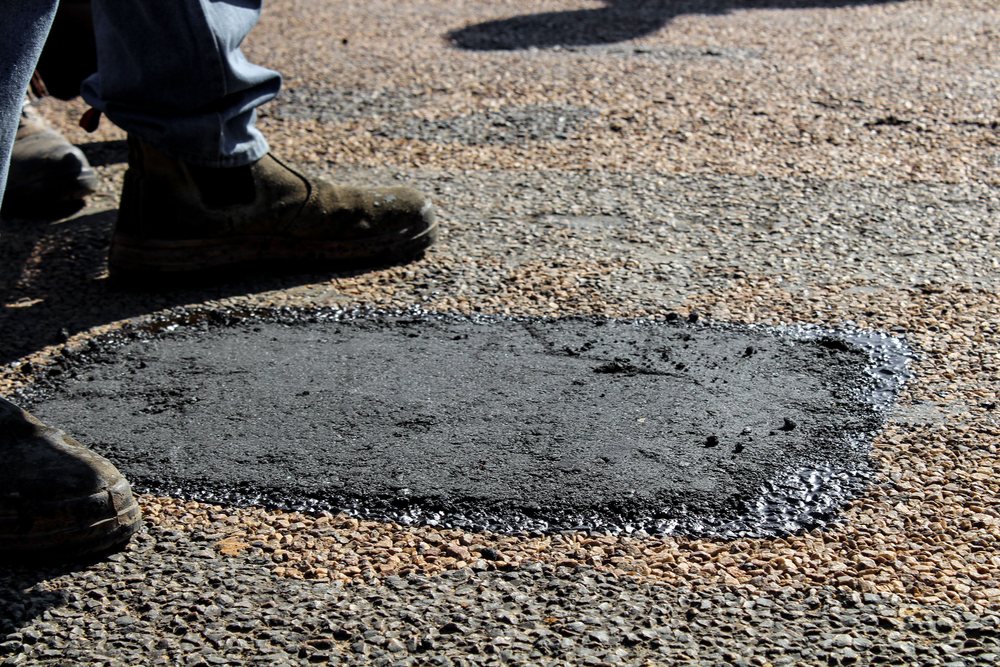 Our asphalt repair page puts it plainly: a dip that holds water after rain is usually a base problem wearing a surface problem’s clothing. Filling it without dealing with what is under it puts you back where you started.
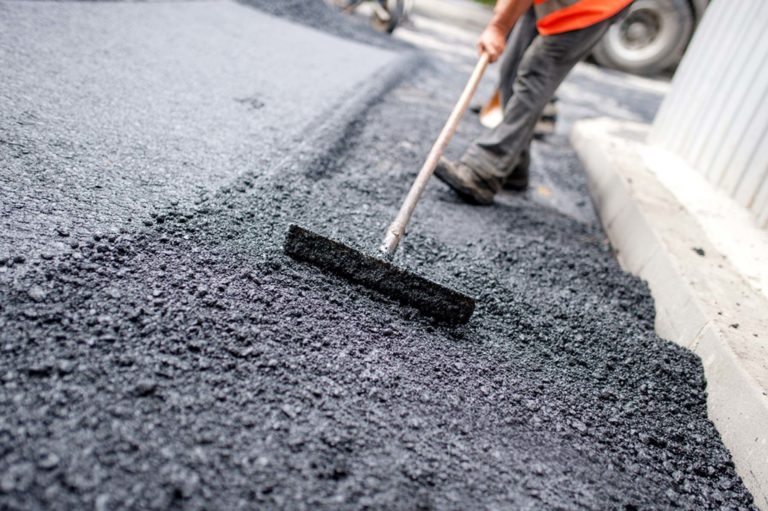
For a sunken area that is still contained, the repair is cut back to sound asphalt, the soft base is taken out and rebuilt with stone compacted in layers, and new asphalt is laid and compacted hot.
When settling has spread across most of the driveway, asphalt replacing is usually the honest answer. The old surface comes out, settled ground is dug out and rebuilt, and the levels are reset before anything new goes down.
On muck, what turns up underneath can change the plan. When it does, we tell you on the day it happens.
Moving Water Off a Low, Flat Lot
A dip is also a place for water to sit, and water left standing works its way into the base. That turns a settling problem into a softening problem.
NOAA’s Atlas 14 rainfall estimates for central Metairie show how much water a driveway has to shed. A one-hour storm of about 2.02 inches is expected roughly once a year on average. The 10-year one-hour storm is about 3.32 inches, and the 10-year storm over a full day is about 8.26 inches.
Levels set for that kind of rain have to carry water away from the house and toward the street or a drain. Our guide to how proper asphalt drainage helps prevent long-term damage covers why that matters for the life of the surface.
FEMA’s guidance on levees is worth remembering here as well. It says levees can help reduce the risk of flooding but do not eliminate it, so a driveway on protected ground still needs to drain on its own.
Where Metairie Homeowners Should Start
The data points one way. Most of Metairie’s land is drained muck that the USDA expects to keep losing height, and it does not settle evenly under a long slab like a driveway.
That is why a new coat on top rarely fixes a sinking driveway, and why a patch over a dip so often fails in the same place. For more on the cracks and holes that follow, see our guide to dealing with common asphalt problems like potholes and cracks.
At TurnKey Asphalt, we look at the ground and the levels before we quote, and we will tell you plainly whether a repair will hold or the base needs rebuilding. Every project comes with a free written estimate.
Our Metairie asphalt service page lists everything we do in the area.
To have your Metairie driveway looked at, call us today at (504) 576-9561.
Frequently Asked Questions
What kind of soil is under most of Metairie?
The USDA soil survey maps about 60 percent of the land inside Metairie’s Census boundary as drained muck. Kenner muck covers about 38 percent and Allemands muck about 21 percent, by our count from the survey data.
Muck is an organic soil formed from marsh plant remains. Most of the remaining land is clay, mainly Schriever and Harahan clay, with smaller areas of Cancienne soils. That mix is why two driveways a few blocks apart can behave very differently.
What is soil subsidence?
The USDA defines subsidence as the decrease in surface elevation that follows the drainage of wet soils with organic layers. Initial subsidence happens within about the first three years after drainage, as the soil shrinks and compacts.
After that, the ground keeps dropping at a slower, steady rate, mainly because the exposed organic material oxidizes. It continues until it reaches the water table or the mineral soil below.
Why does my driveway sink more in some spots than others?
A driveway crosses several kinds of ground, and they do not all settle at the same pace. The USDA handbook warns that sidewalks and roads without special foundations may settle at different rates and break as a result.
Fill near the street, muck in the middle and a slab beside the house can each move differently. The asphalt bends and cracks where they meet, and water then collects in the low spots.
How much can Metairie ground settle?
The USDA estimates for the main part of Kenner muck are about 22 inches of initial subsidence and about 51 inches of total potential subsidence. For Allemands muck, the estimates are about 8 and 18 inches.
Those are estimates for the soil, not predictions for a single lot, and the handbook says total subsidence is rarely reached. Clay areas such as Schriever clay are rated far lower.
Can I just fill the low spot in my driveway?
Filling a dip with new asphalt treats the surface and leaves the cause in place. Our repair page says that a dip holding water is usually a base problem showing up at the surface.
On settling ground, the low spot tends to come back. A lasting repair cuts the area out, rebuilds the base underneath and sets the levels so water leaves.
Should I repair or replace a sinking Metairie driveway?
It depends on how much of the driveway has moved. A dip confined to one area, with firm asphalt around it, can usually be repaired by rebuilding the base under that section.
When settling has spread across most of the surface, cracks have joined into a web, or repairs keep failing in the same spots, replacement is usually the better answer. We tell you which one we see before you decide.
Does heavy rain make settling worse?
Rain is not what drives subsidence, but it makes a settled driveway fail faster. Water that stands in a dip works its way into the base and weakens it, and NOAA estimates about 2 inches of rain in one hour roughly once a year in central Metairie.
That is why levels matter as much as the base. A driveway that sheds water keeps its base dry between storms.
Does living behind a levee mean my driveway will not flood?
No. FEMA says levees can help reduce the risk of flooding but do not eliminate it. Much of Metairie’s drained marsh is kept dry by levees and pumps, so heavy rain still has to drain off each property.
A driveway that carries water away from the house and toward the street or a drain is the part of that system a homeowner controls.