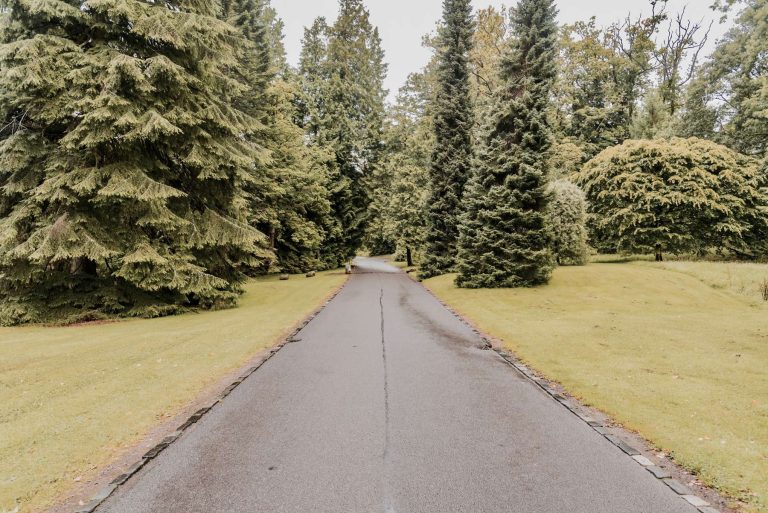


Most River Ridge homes went up between the 1950s and the 1970s, on flat ground that the USDA maps mostly as clay. The driveways built then are now old, and the soil under them stays wet for much of the winter.
When a River Ridge driveway fails, the asphalt on top is not usually the cause. It fails because of what sits a few inches below it.
The soil under most of the community is a heavy clay that drains slowly, swells when wet and loses strength when it stays soaked. That changes how a driveway should be repaired, and it explains why some patches never seem to hold.
At TurnKey Asphalt, we look at the base under a driveway before we talk about the surface, because on this kind of ground the base decides how long the work lasts.
If your driveway already has dips, ruts or cracks that keep coming back, contact us and we will tell you what is going on underneath it.
This guide walks through what the federal soil, housing and weather data say about River Ridge, the warning signs of a base problem, and how a driveway on clay is put back together properly.
What the Ground Under River Ridge Is Made Of
The USDA’s soil survey for Jefferson Parish maps River Ridge in detail. We ran the survey data against the Census Bureau’s boundary for River Ridge, and two soils cover almost all of the land.
Schriever Clay Under Most of the Community
About 57 percent of the land area inside the River Ridge boundary is mapped as Schriever clay. The USDA describes the Schriever series as very deep, poorly drained, very slowly permeable soils that formed in clayey alluvium.
Its clay is dominated by smectites, the group of clay minerals that swell when they take on water and shrink as they dry. A driveway base sitting on that kind of clay is resting on ground that moves with the seasons.
Cancienne Silt Loam on Much of the Rest
Another 32 percent or so is Cancienne silt loam. It is a lighter, siltier soil than Schriever, and the USDA classes it as somewhat poorly drained rather than poorly drained.
That sounds like better news, and in some ways it is. The USDA ratings still flag Cancienne for low strength and shrink-swell, so a driveway on it is not automatically in the clear.
Water Sitting Close to the Surface in Winter
The Schriever description adds a detail that matters for pavement. In normal years, the top half foot of the soil is saturated from December through April.
NOAA’s 1991 to 2020 normals for the New Orleans International Airport station, about 4 miles west of River Ridge, put December to February rainfall at 14.13 inches. That is a lot of water arriving during the months when this clay is already full.
What the USDA Ratings Say About Roads and Driveways
The soil survey rates every soil for building local roads and streets, which is the closest rating to a driveway. Schriever clay is rated “very limited,” and the reasons listed are depth to a saturated zone, shrink-swell, low strength and flooding.
Cancienne silt loam is rated “somewhat limited,” for low strength and shrink-swell. Neither rating means you cannot pave here. They mean the base has to be built for the ground it sits on.
How River Ridge’s Older Homes Shape Driveway Work
The housing data explains why so many River Ridge driveways are reaching the same stage at once.
Most Homes Were Built From 1950 to 1979
The Census Bureau’s American Community Survey for 2020 to 2024 puts the median year built for River Ridge homes at 1971. Of roughly 6,325 housing units, about 64.8 percent were built between 1950 and 1979.
A driveway of that age may have been patched, sealed or overlaid more than once. Each layer added on top makes it harder to see what the original base looks like.
Mostly Single-Family Driveways
About 74.8 percent of River Ridge housing units are single-family detached homes, and about 70.6 percent of occupied homes are lived in by their owners. In practical terms, most of the pavement in River Ridge is residential driveways looked after by the people who park on them.
That puts the decision about patch versus rebuild in the homeowner’s hands. It also means a driveway that needs base work is usually a single, contained job.
Not Every Lifted Section Is a Soil Problem
Tree roots can raise a driveway in a way that looks like a base failure at first glance. A section pushed up into a ridge is a different problem from one sinking into a dip.
When a driveway near a big tree is lifting, our guide to live oak roots and asphalt driveways covers that separate problem.
Warning Signs of a Base Problem on River Ridge Clay
Base problems on clay tend to show up in a few recognizable ways. None of them are cosmetic, and none of them are fixed by a coat of sealer.
Ruts and Dips Where the Tires Track
A shallow trough running where the wheels sit every day can be a sign that the base or the soil below it is giving way under load.
Our repair page puts it plainly: a dip that holds water after rain is usually a base problem showing up at the surface.
Cracks That Join Into a Web
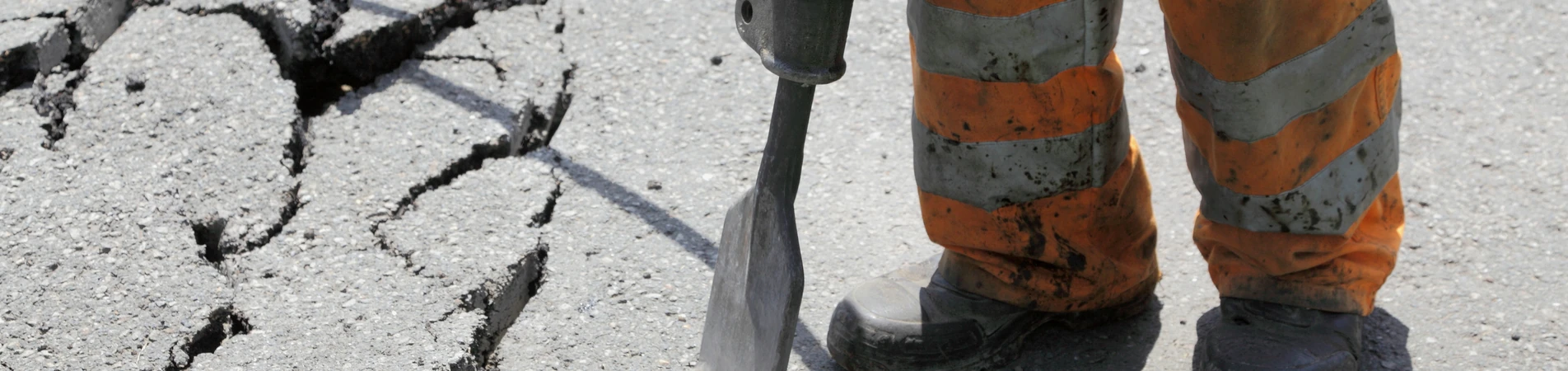
A single crack is a sealing job. Once separate cracks start joining into a connected pattern, the surface is telling you the layer beneath it is moving.
Once that web appears across a large area, it is one of the signs our asphalt replacing page lists for moving past patching.
Water That Stands After Every Rain
A flat lot on slow-draining clay gives water few places to go. If the same spots hold puddles after each storm, the levels are no longer moving water off the surface, and that water is working its way into the base.
Our guide to how proper asphalt drainage helps prevent long-term damage explains why that standing water shortens a driveway’s life.
Edges Breaking Up Along the Lawn
The edge of a driveway is its weakest part. Our repair page notes that edges typically fail where a driveway meets grass and nothing holds the asphalt in place sideways.
On clay that stays wet next to a lawn, that edge has soft ground on one side and traffic on the other. Crumbling along the border is often the first place a tired base shows itself.
Patches That Fail in the Same Place
A patch that breaks up within a season or two, in the same spot, is telling you the cause was never reached. On Schriever clay, that cause is usually a soft, wet base under the patch.
How a River Ridge Driveway Is Rebuilt to Last
The repair has to match how deep the problem goes. On this ground, the most common mistake is treating a base failure as a surface problem.
Start by Finding Where the Failure Is
We look at the whole surface first, not just the broken part. The pattern of the damage shows where water has been going and how far the soft area spreads.
Choose the Repair That Reaches the Cause
The table below sets out the common approaches and where each one fits on River Ridge ground.
| Method | What It Addresses | Best For |
|---|---|---|
| Crack sealing | Closes single cracks so rain stops reaching the base | Separate lines on a surface that is still firm underfoot |
| Cut-out repair with base rebuild | Removes a failed section, replaces the soft base, then repaves the area | Ruts, dips or webbed cracking confined to defined areas |
| Overlay on the existing surface | Renews a worn top over a base that is still sound | Driveways with surface wear but no ruts or standing water |
| Full replacement | Takes out the old surface, rebuilds the base and resets the levels | Failure across most of the driveway, or repairs that keep coming back |
For a side-by-side of surface treatments, see our guide to sealcoating vs. resurfacing vs. repaving.
Rebuild the Base Where It Has Failed
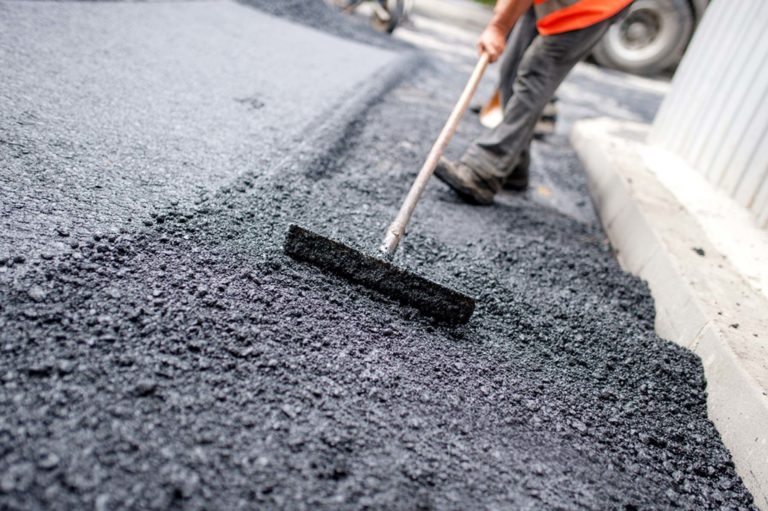
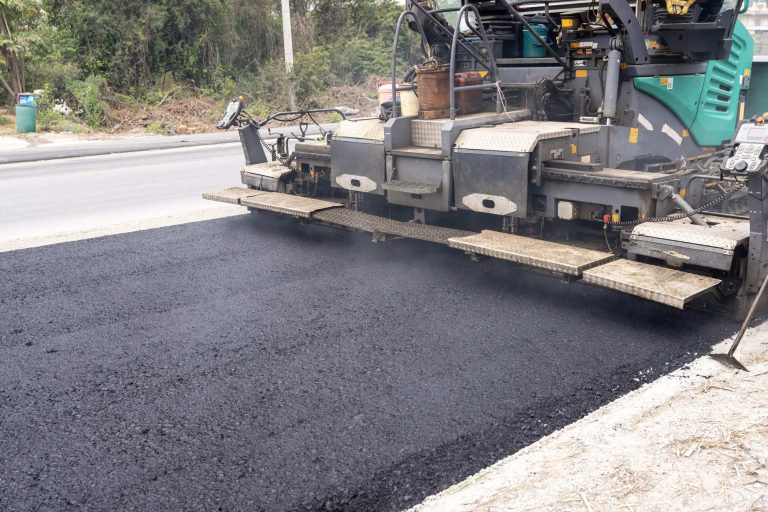
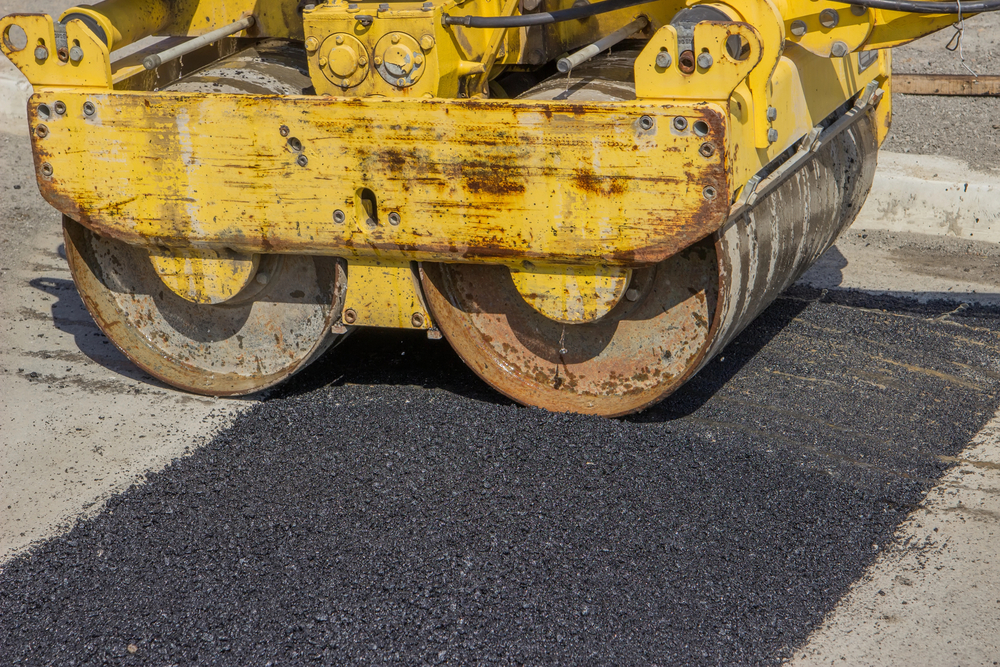
 For a localized failure, our asphalt repair work follows a fixed order. We cut the failed area back to sound asphalt, take out anything soft underneath, compact or replace the base, then lay and compact the new material while it is hot and seal the joint around it.
On clay, the base step carries the most weight. Stone laid and compacted in layers gives the surface something firm to sit on, even when the soil below it is wet.
Set the Levels So Water Leaves
Both of the main River Ridge soils are mapped at 0 to 1 percent slopes, so there is little natural fall to carry rain away. When we rebuild a section or a whole driveway, the levels are set before any asphalt arrives, because once the surface is down they cannot be changed.
Plan Around the Wet Season
Because the top of Schriever clay is saturated from December through April in normal years, the state of the ground on the day matters as much as the plan. Before work starts, we tell you what the weather would have to do for us to stop, and what happens to your dates if it does.
Digging out a failed section can also turn up soft, wet soil that was not visible from the surface. That has to be dealt with before any stone goes in, and if it changes the plan, we tell you on the day it does.
Know Your Flood Zone Before Major Work
FEMA’s flood maps show how a property sits relative to the areas with the highest flood risk. FEMA labels its high-risk areas with zones such as Zone AE, and moderate-risk areas as Zone X (shaded).
FEMA also says there is no such thing as a “no-risk zone.” Looking up your own zone before a full rebuild helps you plan the levels and drainage around how often water is likely to reach the property.
If the signs above match your driveway, our list of signs it’s time to repave your asphalt driveway can help you judge how far along it is.
What This Means for Your River Ridge Home
A River Ridge driveway sits on clay that holds water through the winter and swells and shrinks as it wets and dries. On top of that, most of the homes were built between 1950 and 1979, and many of the driveways beside them have been in place for decades.
That does not make a long-lasting driveway impossible. It means the work has to start below the surface, with a base that can carry the load over soft, wet ground.
At TurnKey Asphalt, we look at the base before we quote, and we will tell you plainly whether a repair will hold or a section needs to be rebuilt. Every project comes with a free written estimate.
Our River Ridge asphalt service page lists everything we do in the area.
To have your River Ridge driveway looked at, call us at (504) 576-9561.
Frequently Asked Questions
What kind of soil is under River Ridge?
The USDA soil survey maps most of River Ridge as Schriever clay, covering about 57 percent of the land area by our count, with Cancienne silt loam on much of the rest. Schriever is a poorly drained clay that formed in clayey river deposits.
Why does clay soil cause driveway problems?
Schriever clay is dominated by smectites, clay minerals that swell when wet and shrink as they dry. The USDA rates it “very limited” for local roads and streets because of a shallow saturated zone, shrink-swell, low strength and flooding. A driveway base on that soil has to be built to make up for it.
When is the ground wettest in River Ridge?
The USDA describes Schriever soils as saturated in the top half foot from December through April in normal years. NOAA normals for the nearby New Orleans International Airport station show 14.13 inches of rain from December to February.
How old are most River Ridge homes?
Census data for 2020 to 2024 gives a median year built of 1971. About 64.8 percent of River Ridge homes were built between 1950 and 1979.
Can sealcoating fix ruts or dips in my driveway?
No. Sealcoating protects a surface that is still sound, and it carries no load. Ruts and dips that hold water usually point to a base problem, which needs a repair that reaches the base.
Should I patch or replace my River Ridge driveway?
It depends on how widespread the damage is. Failures confined to defined areas with a firm surface around them can usually be repaired, while webbed cracking across most of the driveway, standing water everywhere or patches that keep failing usually point toward replacement.
How do I find my River Ridge property’s flood zone?
FEMA’s flood maps show how a property sits relative to the highest-risk flood areas. FEMA also notes that there is no such thing as a “no-risk zone,” so it is worth checking even if you have never flooded.
Does a River Ridge driveway need a thicker base?
The right base depends on the soil, the drainage and the vehicles using it, so it is decided on site. On Schriever clay, which the USDA rates “very limited” for roads, we give the base and the levels more attention than the asphalt on top.