

Gretna falls about 20 feet from its high ground at the Mississippi River levee to its lowest land near Timberlane. In a hard storm its streets carry water, and the city sets its own rules on how wide a driveway can be and who approves the curb cut.
A new driveway in Gretna is shaped as much by the city as by the lot. The width, the apron at the street and, in two neighborhoods, the look of the work all have rules behind them.
Water is the other half of the picture. Gretna’s own stormwater study names paved surfaces, low ground and flat land as the main reasons its streets flood in heavy rain.
At TurnKey Asphalt, we settle the permission questions before anyone breaks ground, because that is the cheapest time to get them right.
If you are planning a new driveway or a rebuild, contact us and we will walk the lot with you.
This guide covers where Gretna’s rain goes, the city’s driveway size rules, the drainage checks worth doing first and who reviews which part of the work.
Where Gretna Sits and Where Its Rain Goes
Gretna covers about 5.4 square miles of the West Bank, according to the city’s Stormwater Master Plan. That plan, finished in December 2024, explains why water behaves the way it does on Gretna streets.
High Ground by the River, Low Ground to the South
The plan puts the highest land in the city at the Mississippi River levee and the lowest near the Timberlane neighborhood. Elevations run from about 10 feet above to 10 feet below the plan’s reference level.
The city slopes gently from north to south. A driveway near the river and one south of Lapalco Boulevard sit on very different ground, even though both are in Gretna.
A Drained Wetland Inside a Levee System
Before the river and hurricane levees were built, most of what is now Gretna was tidally flooded wetland, the plan says. Roads and homes stayed on the high ground near the river until the levees let the lower land be drained and built on.
Today the city sits inside the East of Harvey Basin, an area enclosed by levees. Its canals carry rainwater south toward three pump stations: Planters, Engineers and Hero Canal.
Streets That Carry Water When Pipes Fill
Inside the levees, the plan names intense rainfall as the most critical source of flood risk. It lists a large share of paved and roofed surface, low ground, poor land slope and dense building as the main drivers.
The pipe network handles small storms. When heavy or long rain overwhelms it, the plan says the streets become the “channel of last resort,” carrying water until it finds an inlet with room.
Neighborhoods Built Over Two Centuries
The city’s history page dates McDonoghville to 1815, Mechanikham to 1836 and Gretna two years after that. McDonoghville is known for modest homes set back on sizeable lots.
After the Mississippi River Bridge opened in 1958, the city grew south with the Bellevue, New Garden Park and Timberlane subdivisions. A driveway in Old Gretna and one in Timberlane sit at very different heights in the same drainage system.
Gretna Rules That Set the Size of a Driveway
Gretna’s Unified Development Code, amended October 8, 2025, sets limits on residential driveways for one and two-family homes. These are the numbers to know before a layout is drawn.
Twenty Feet Along the Front Property Line
A driveway on a single lot may not be wider than 20 feet, measured along the front property line. A shared driveway between two lots can be up to 24 feet.
Half the Lot Width in the Front Yard
In the front yard, a driveway may not take up more than half the width of the lot. On a lot narrower than 40 feet, that is a tighter limit than the 20-foot rule.
Five Feet of Green Space Between Neighbors
Driveways on neighboring lots must be separated by at least 5 feet of green space. The code allows exceptions for a shared driveway, for lots too narrow to allow the spacing or where the Planning Director approves less.
Limits on Paved Yard Space
On single-family and duplex lots in residential districts, no more than half of the required setback areas may be covered with hard surfaces, unless the Planning Director decides otherwise. The code adds that pervious surfaces may be required for parking in those setback areas.
Parking in the area reserved for front yard green space is not allowed. In the Old Gretna/Mechanickham and McDonoghville overlay districts, the Planning Director may approve other front yard parking arrangements that keep sidewalks safe to use.
Drainage Checks Before a Gretna Driveway Is Paved
A driveway that meets every size rule can still hold water if the levels are wrong. These are the checks worth doing on a Gretna lot before any asphalt is ordered.
Where Your Street Sits in the Flood Picture
The Stormwater Master Plan maps where its model shows water still a foot deep or more after a storm ends. The worst areas are in the central and southern parts of the city, along the internal canals and around Gretna City Park and the Timberlane Country Club.
For its modeling, the plan uses about 6 inches of rain in 6 hours for a 10-year storm. If your street is one that fills in storms like that, the driveway’s low point and the apron need to be planned around it.
The Catch Basin at the Curb
Gretna’s drainage runs through a large pipe network. A 2022 and 2023 survey for the city recorded about 10,800 catch basins or manholes and 9,200 connecting pipes.
The city’s Parks and Parkways Department asks residents to clear debris around drains, catch basins and drop inlets, and not to park over storm drains during a rain event. If the inlet near your driveway is blocked, report it to the department before blaming the pavement for standing water.
Levels Set Before Any Asphalt Arrives
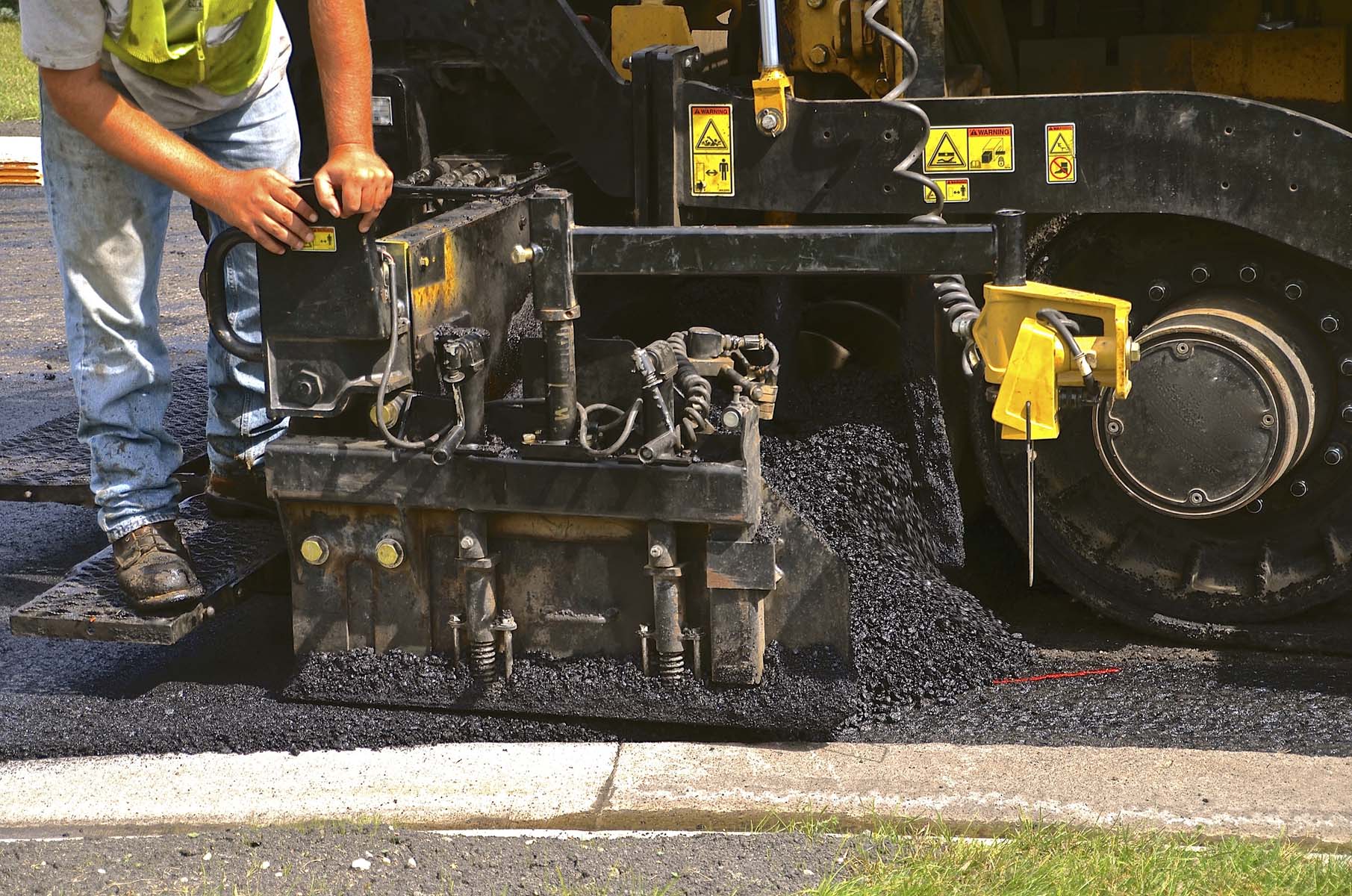 On flat ground, the finished levels decide whether rain leaves the driveway or sits on it. In our asphalt installation work, we cut the ground to those levels before any material arrives, because that is where drainage is won or lost.
Our post on how proper asphalt drainage prevents long-term damage covers grading and slope in more detail.
Streets Without Curb and Gutter
Not every Gretna street has a curb and gutter. In the code’s street standards for subdivisions, where curbs and gutters are not used, the property owner who relies on that access is responsible for installing, maintaining and repairing the driveway and the drainage improvements serving it.
That usually means a ditch or culvert at the front of the lot. It has to keep working after the new driveway goes in.
How Gretna Driveway Work Is Reviewed and Approved
The Building Department handles permits and inspections in Gretna, and most of its permitting starts online through the mgoconnect.org portal. The table sorts the parts of a driveway project by what the city’s own pages and code say about them.
| Part of the Project | What the City Says | Where to Ask |
|---|---|---|
| Apron and curb cut on the public right-of-way | Needs consultation with Public Works and Planning and Zoning. Work that disturbs the right-of-way needs a driveway or right-of-way permit first. | Building Department, Public Works, Planning and Zoning |
| A new or modified driveway | Reviewed and approved by the Planning Director and Building Official when not part of a conditional use application | Planning and Zoning, Building Department |
| Exterior work seen from the street in a historic district | Needs a Certificate of Appropriateness from the Historic District Commission and any building permits before work starts | Building Department, which takes HDC applications |
| Other construction, alteration or repair | The city lists work it says needs a permit, and required permits must be obtained before any work begins | Building Department |
Aprons, Curb Cuts and the Right-of-Way
The apron is the part of a driveway most likely to sit on city property. Gretna’s code says anyone disturbing the surface of a public right-of-way must first get a driveway or right-of-way permit from the Building Official.
The applicant has to locate all existing utilities, above and below ground, before applying. The right-of-way has to be restored to the standard Public Works approves, and the city may require a maintenance bond that stays in force for at least a year.
Historic District Review
Gretna has two historic districts, Mechanickham/Old Gretna and McDonoghville. A seven-member volunteer commission reviews exterior work in them that can be seen from the street.
The commission usually meets on the Monday of the week before the monthly City Council meeting. Complete applications are due at the Building Department by close of business on the Monday of the week before that meeting, so plan the schedule around it.
If your home is in either district, ask the Building Department early whether your driveway work goes to the commission.
Stormwater Permits and Single-Family Lots
Gretna’s code requires a stormwater management permit for development covering 10,000 square feet or more of site area. The same section excludes development of a single-family or duplex lot.
The code’s parking section also encourages pervious pavement in place of standard pavement wherever feasible. The Stormwater Master Plan’s green infrastructure proposal for McDonoghville, Old Garden Park and Old Gretna-Mechanickham includes pervious pavers among its measures.
Repair, Resurfacing or Replacement
Not every Gretna driveway needs to come out. Our asphalt repair work deals with failed spots in place, as long as water has not reached the base underneath.
When it has, the fix has to start lower down. Our guide to sealcoating vs. resurfacing vs. repaving walks through when each option fits.
What This Means for Your Gretna Home
A Gretna driveway has to fit the city’s size limits, meet the street at an approved apron and drain on ground that slopes toward the south. In Old Gretna and McDonoghville, it may also need the historic commission’s sign-off.
None of that should stop a good project. It just means the questions get asked in the right order, starting with the city and the levels, with the asphalt last.
At TurnKey Asphalt, we settle where the work needs the city’s permission before anyone breaks ground. Every estimate comes to you in writing, at no cost, before anything starts.
For what we check at each stage of the work itself, see what gets checked at each step of an asphalt installation. Our guide to understanding asphalt lifespan covers how to make a new surface last, and our Gretna asphalt service page covers everything we do in the city.
To talk through a driveway in Gretna, call us at (504) 576-9561.
Frequently Asked Questions
How wide can a driveway be in Gretna?
Gretna’s Unified Development Code limits a single-lot driveway to 20 feet, measured along the front property line, and a shared driveway to 24 feet. In the front yard, a driveway also may not take up more than half the width of the lot.
Do I need a permit to pave a driveway in Gretna?
The city’s Building Department says a permit is required to construct, enlarge, alter or repair, and that required permits must be obtained before any work begins. Aprons and curb cuts on the public right-of-way require consultation with Public Works and Planning and Zoning. Ask the Building Department what applies to your project before work starts.
Who approves a new curb cut in Gretna?
The Building Department page sends curb cuts and driveway aprons on the public right-of-way to Public Works and Planning and Zoning. Under the code, work that disturbs the right-of-way also needs a driveway or right-of-way permit from the Building Official.
Can I pave my whole front yard in Gretna?
Usually not. On single-family and duplex lots in residential districts, the code allows no more than half of the required setback areas to be covered with hard surfaces unless the Planning Director decides otherwise. Parking in the front yard green space is also prohibited.
Does a driveway in Old Gretna need historic district approval?
The city says all exterior work visible from the public right-of-way in its two historic districts, Mechanickham/Old Gretna and McDonoghville, must receive a Certificate of Appropriateness. Ask the Building Department early whether your driveway project goes to the Historic District Commission.
Which parts of Gretna flood most in heavy rain?
The city’s Stormwater Master Plan finds the worst street flooding in the central and southern parts of the city, along the internal canals, and around Gretna City Park and the Timberlane Country Club. Flooding spreads farther as rainfall gets heavier.
Why does water sit at the end of my Gretna driveway?
It may be a blocked inlet, a low apron or a street that is carrying storm water. The city asks residents to keep debris clear of drains and catch basins, and its Parks and Parkways Department takes reports of street and drainage problems.
Who maintains the ditch in front of my Gretna home?
Under the code’s street standards for subdivisions, where a street has no curb and gutter, the property owner who relies on that access is responsible for the driveway and the drainage improvements serving it. If you are unsure about your street, ask the city before you pave over or around a ditch.