(504) 576-9561
Free Estimate!
Finished and striped commercial asphalt parking lot

New Orleans metro

Seal Coating Asphalt Paving in New Orleans, LA

Tell us the surface and the square footage and the job gets priced properly instead of guessed at. We are fully licensed, bonded, and insured.

Seal Coating Asphalt Paving

What Does Seal Coating Actually Do?

Seal coating puts a protective layer over a sound asphalt surface, so that sun, water and spilled fuel or oil reach the coat instead of the asphalt underneath. It is protection for a surface that is still in good order. It is not a repair, and it will not rescue a surface that has already failed.

Think of it as the coat on the outside of a building rather than the wall itself. It takes the weather so the thing underneath does not have to.

What a Coat Does

Slows the weathering that dries a surface out and turns it gray, sheds water at the surface rather than letting it work into the top layer, takes the wear where vehicles stand, and restores the even, dark finish the surface had when it was new.
What a Coat Does Not Do

It does not fill or fix cracks, which is separate work done before any coat goes on. It adds no strength and carries no load, and it cannot help a surface whose base has gone, which is a case for replacement.

Seal Coating Asphalt Paving

How Often Should a Surface Be Seal Coated?

A surface should be seal coated when it is ready rather than on a fixed schedule, and what tells you it is ready is the surface itself. Coating too early wastes a coat on a surface that is still shedding water on its own, and coating too late puts a coat over damage that should have been dealt with first.

Color

A surface that has gone gray and open has lost binder at the top, which is what a coat replaces.

Texture

Loose grit that sweeps off the surface means it is raveling rather than holding together.

Water

A surface that darkens and stays damp is taking water in rather than shedding it.

Cracks

Anything wide enough to take sealant is repair work first and coat second, never the other way round.

Our asphalt maintenance page sets out how those checks fit into the rest of the routine.

Seal Coating Asphalt Paving

What Has to Happen Before a Coat Goes On?

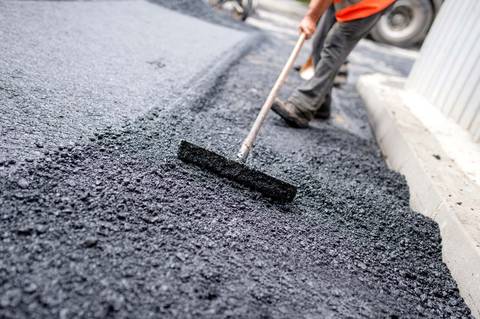
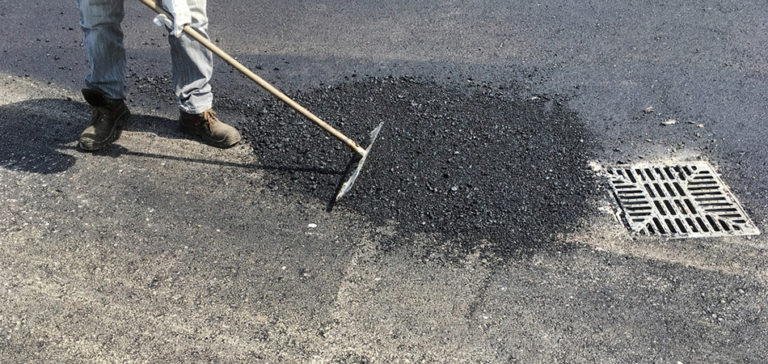
Preparation is most of the job: the surface is cleaned down, any growth and loose material is removed, oil patches are treated, and any crack wide enough to take sealant is filled first. A coat laid over a dirty surface or an open crack shows the problem again at exactly those points.

Surface being prepared and worked by hand before a protective coat

We Clean the Surface Down

Dirt, grit and growth are cleared, because a coat bonds to asphalt and not to what is sitting on it. Anything left behind becomes a place where the coat lifts.

We Seal the Cracks First

Cracks wide enough to take sealant are filled as separate work, and the sealant needs time to cure before a coat goes over it. A crack left open comes back up through the new coat along the same line.

Hairline cracks are different. Those the coat can cover on its own, which is part of why catching a surface early is worth so much.

We Treat Oil and Fuel Marks

Where vehicles have stood, the asphalt is often softened and contaminated. Those areas are treated so the coat has something it can hold onto.

Seal Coating Asphalt Paving

How Long Does the Surface Stay Closed?

A coat needs time to cure before it takes traffic, and how long depends on the weather that day and on what will be driving over it. We tell you on site what your surface needs and when it can be used, and on a lot that has to stay open we work in sections so part of it stays open.

What You Know Before We Start

Which parts close, on which days, and what has to be moved off the surface before the crew arrives.

Working in Sections

On a lot that has to stay open we coat in sections, so part of the surface stays available throughout.

Vehicles Are the Part People Forget

A coat driven on before it is ready carries those tire marks afterwards. We would rather hold the surface a little longer than hand it back marked.

Seal Coating Asphalt Paving

What Moves the Price of Seal Coating?

The price moves with the measured area, how much preparation and crack sealing the surface needs first, access for our equipment, and how much of the area can be closed at once. We do not publish a price per square foot, because two surfaces of the same size can need very different preparation.

You get the whole thing in writing before anything starts, at no cost.

Preparation Is the Variable

Not the coat. Two surfaces of the same measured area can need very different work before a single drop of coating is used.

What Preparation Can Mean

A clean surface with two cracks, or a surface with growth through the joints and oil across the parking bays. Those are different jobs.

Seal Coating Asphalt Paving

What If the Surface Is Past Sealing?

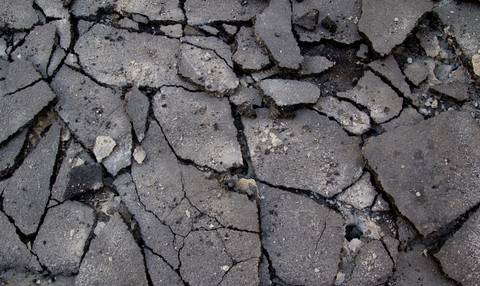
If the surface has cracked into a connected pattern, moves under weight, or holds water in the same places after every rain, a coat is money spent on the wrong thing. We will tell you which answer applies before you have paid for a coat that cannot help.

Repair

Where the failure is still confined to defined areas and the base under it is sound.

A Fresh Layer

Where the existing surface is structurally sound enough to carry a new layer over it.

Full Replacement

Where the base has gone, and anything laid over it would fail in the same places.

Seal Coating Asphalt Paving

Where Do We Seal Coat?

We seal coat across the New Orleans metro, and each area we cover has a page of its own with the local detail on it. If your property sits on the edge of these areas, call us and we will tell you plainly whether it is in range.

Greater New Orleans

New Orleans, Metairie, Kenner, Gretna, Harahan and River Ridge, across Orleans and Jefferson Parish.

The Northshore

Slidell, Covington, Mandeville and Madisonville, across St. Tammany Parish.

The River Parishes and Baton Rouge

St. Rose, LaPlace, Hammond and Baton Rouge, across St. Charles, St. John the Baptist, Tangipahoa and East Baton Rouge Parish.

Standards

What Do the Asphalt Specifications Actually Say?

Two claims repeated across the paving trade do not survive a reading of the source documents.

A Minutes, not days

Asphalt does not have a cure time. It gains full strength on cooling and can typically support traffic within minutes of construction, and hours only in rare cases depending on lift thickness and ambient conditions. A newly built two inch surface is generally a few minutes.

B A few days is advice

The association guidance still recommends waiting a few days before opening a new residential driveway, and keeping a heavy moving truck off a fresh mat. That is best practice advice about protecting a new surface, not a curing requirement.

C No single minimum temperature

The minimum is set by lift thickness and mix type in the governing specification. Colorado DOT Table 401-3 sets 60 F for a top layer under 1.5 inches, 50 F from 1.5 to under 3 inches, and 45 F at 3 inches or more. Tennessee DOT Table 407.09-1 as revised 12-27-23 sets 45 F unmodified and 55 F modified under 2.0 inches, and 35 F at 2.0 inches or more. Neither of those is Louisiana's specification.

D Do not seal a new mat early

A well designed low traffic pavement should not require sealing for approximately 2 to 5 years, and the association guidance is not to apply sealer until the driveway is at least several months old.

Not claimed here: 3 to 7 days before traffic

Widely repeated, but every page carrying it was a paving company's own marketing or a content site, and the Asphalt Institute contradicts the framing outright. It does not appear on this page.

Not claimed here: 50 F is the minimum

Repeated as a flat rule. The two state specifications read in full show the minimum is thickness and mix dependent, and those two specifications do not even agree with each other.

Ready for a Free Seal Coating Asphalt Paving Estimate in New Orleans?

Tell us the surface and the square footage, and the job gets priced properly instead of guessed at.

Driveways

Residential drives across the New Orleans metro, measured and quoted on the surface you actually have.

Parking lots

Commercial lots, surfaced and graded so water leaves them, then kept that way.

Every area we cover

Each area has its own page, written from its own facts. The service areas page goes straight to any of them.

Get a Free Estimate

Tell us about the driveway or the lot. We reply during business hours, Monday to Friday.

Form not loading for you? The number works just as well: (504) 576-9561, Monday to Friday, 8 AM to 5 PM.