

In much of New Orleans, the oldest thing on the lot is not the house. It is the live oak out front, and its roots have been spreading under the driveway for longer than the asphalt has been there.
Live oaks are part of what makes New Orleans streets look the way they do. They are also one of the most common reasons a driveway that was once smooth now has a ridge, a hump or a crack running straight across it.
In most of these cases, the asphalt itself is not the problem. It is what is growing underneath it, and a repair that ignores the roots usually fails in the same place again.
At TurnKey Asphalt, we deal with whatever is under a surface before we pave over it, because a new mat laid on a moving base does not last.
If roots have already lifted or cracked your driveway, contact us and we will look at what is going on under it.
This guide explains why roots and pavement collide, the signs to watch for, and how a driveway near a large tree can be repaired without making things worse for the tree or the pavement.
Why Tree Roots End Up Under New Orleans Driveways
Tree roots are not where they are often pictured. They do not grow straight down in a neat ball under the trunk. They spread out sideways, close to the surface, and they go a long way.
Most Roots Live in the Top Few Feet of Soil
UF/IFAS Extension, in a publication by Edward F. Gilman on common misperceptions about trees, notes that most tree roots are located within the top 3 feet of soil, and that the finer roots are concentrated in the top several inches.
That is exactly the zone a driveway occupies. The base under an asphalt surface sits in the same shallow layer where a tree is actively growing roots.
Roots Spread Far Beyond the Canopy
The same publication says tree roots extend to 3 or more times the dripline of the tree, and that roughly half of the root system sits outside the dripline.
In practical terms, a driveway does not have to be under the branches to be in the root zone. A large tree two lots over, or across the sidewalk, can still have roots under your pavement.
Live Oaks Are Big Trees
The City of New Orleans Department of Parks and Parkways lists the live oak as a tree that grows to over 50 feet tall with a spread of over 50 feet. Its planting guidance asks for a minimum of 10 feet between a new live oak and a driveway, double the 5 feet it asks for most other trees.
That extra distance is a clue. Even the city plans for live oak roots and driveways to need more space than other trees.
Many of the oaks now shading New Orleans streets and yards were planted long before the driveways next to them. The pavement came later, often right up to the trunk, in soil the tree was already using.
Pavement Changes What the Soil Under It Does
The base under a driveway sits right in that shallow layer, and roots spreading out from the trunk can grow into it.
As those roots thicken year after year, they push against whatever is above them. Asphalt is flexible, but not that flexible.
Signs Roots Are Lifting or Cracking Your Driveway
Root damage tends to have its own pattern, which helps separate it from ordinary wear. Walk the driveway with the nearest trees in mind, and look at where each problem sits relative to a trunk.
A Ridge or Hump That Runs Toward a Tree
The clearest sign is a raised line in the pavement that points back toward a nearby trunk. It often starts small and grows a little more each year. Sometimes you can see the root itself where the pavement edge meets the soil.
Cracks That Radiate From One Area
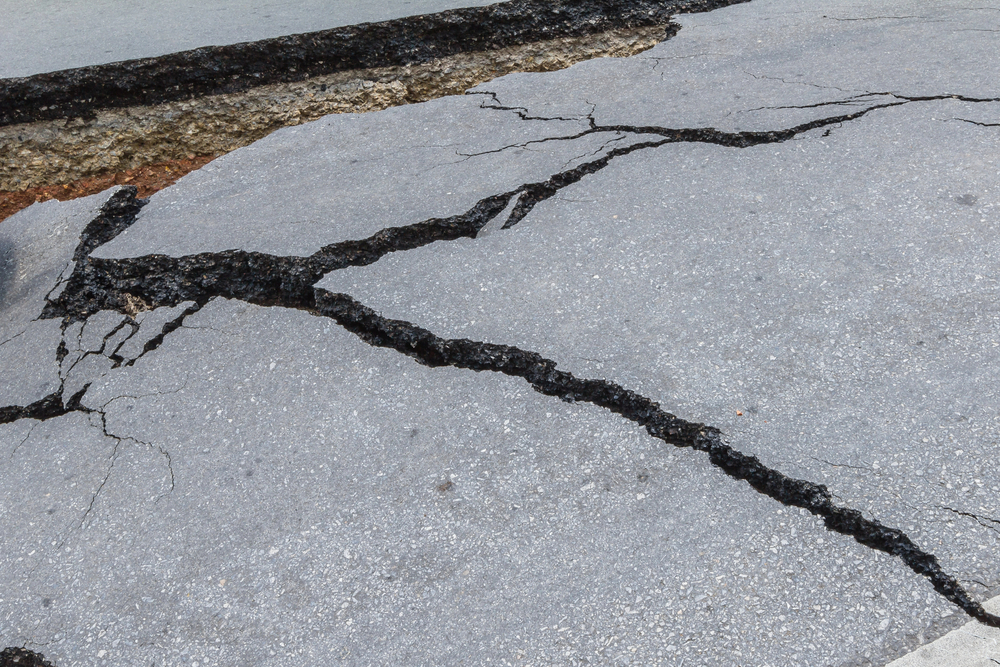
Roots lifting the surface tend to crack it along and around the raised area, sometimes in several directions at once. These cracks open further as the root grows, letting water reach the base below.
Edges Breaking Up Near the Tree
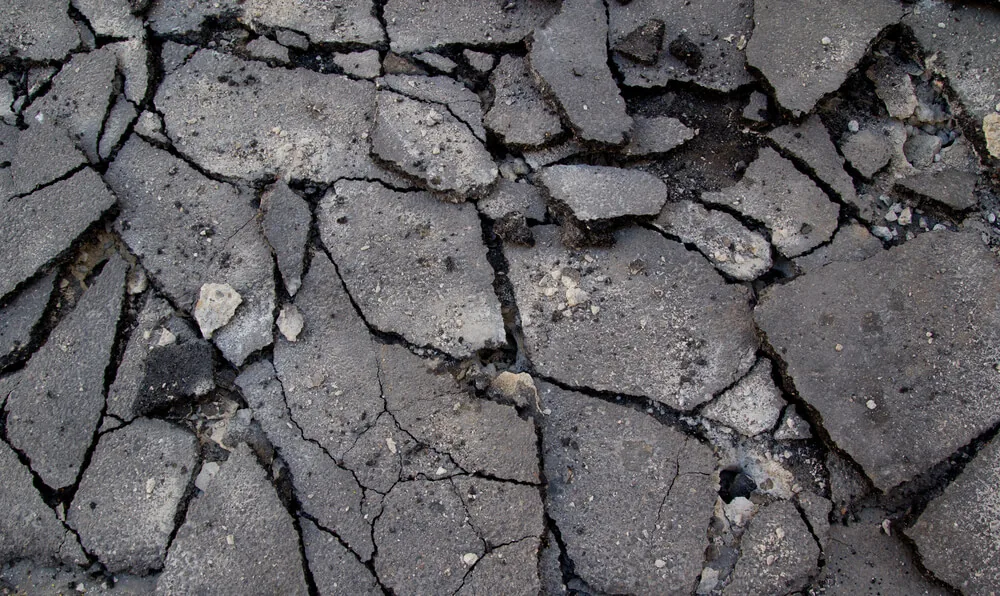 The edge of a driveway closest to a tree often fails first. The pavement there may crumble, tilt or separate from the rest of the surface.
Edges have less support than the middle of a driveway, so a root pushing up from the side has an easier time breaking them. Loose pieces along that edge are worth watching, because they tend to spread inward.
Root Lifting Versus Settling
Not every uneven driveway has a root problem. A section that sinks, leaving a dip or a low spot, usually points to a weak or washed-out base, not a root pushing up from below.
The direction tells you a lot. Roots push pavement up into a ridge or hump, while settlement pulls it down into a hollow.
Some older driveways show both, with a root lifting one area while water undermines the base nearby.
Trip Points and Standing Water
A lifted section can create a step that catches feet and tires. It can also hold water behind it, so puddles form on a driveway that used to drain.
On a driveway shared by cars, bikes and people on foot, that step is a safety issue as much as a looks issue. It is often the first thing that pushes a homeowner to call. Our guide on how proper asphalt drainage helps prevent long-term damage explains why that water matters.
Cracks from other causes look similar at first glance. Our post on dealing with common asphalt problems like potholes and cracks covers the other usual suspects.
Repairing a Driveway Near a Large Tree
Root damage is one of the few asphalt problems where the repair has to account for something alive. The aim is to fix the pavement in a way that lasts, without destroying the tree that caused the problem.
Start With the Tree, Not the Asphalt
Before any digging, find out who is responsible for the tree. A tree on your property is yours to manage. A tree on the public strip between the sidewalk and the street may not be, so check with the City of New Orleans Department of Parks and Parkways before anyone disturbs its roots.
For any large tree, it is worth having a certified arborist look at it first. UF/IFAS advises that to save a tree during construction, the soil beneath the branch dripline should not be disturbed, and that equipment should not operate within the dripline of trees that are to be saved. It also notes that trees frequently decline after construction near them.
Call Louisiana 811 before any digging, as the City’s own planting guidance directs, so buried pipes and cables are marked. Roots and utility lines often share the same shallow ground near the street.
Patching Versus Rebuilding the Section
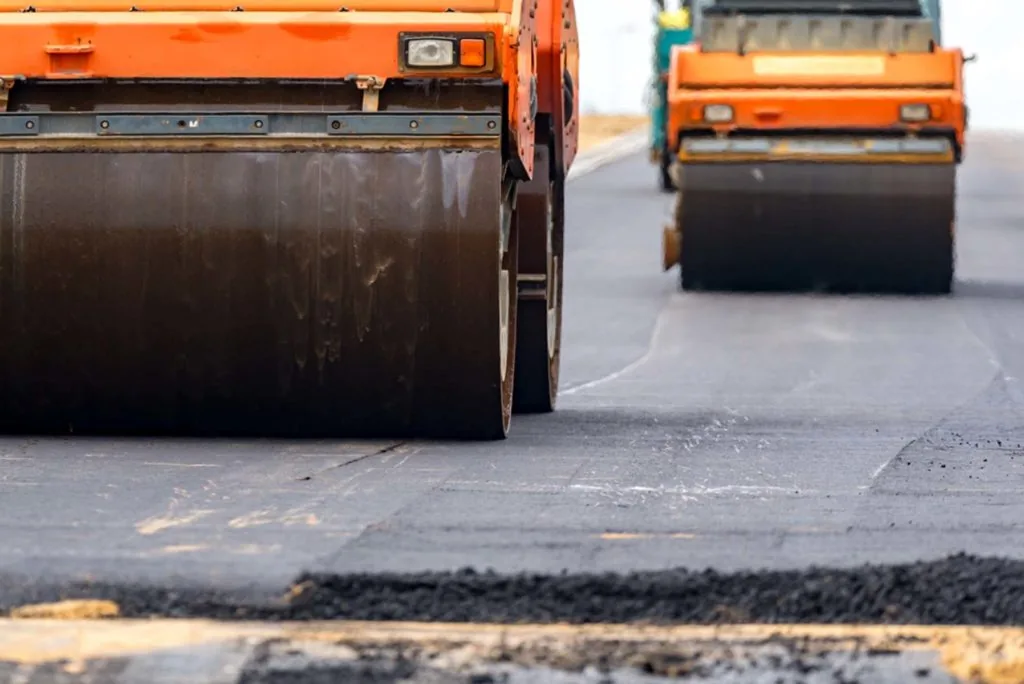 The right repair depends on how big the lifted area is, what condition the base is in, and what the arborist says about the roots underneath.
A small, early lift can sometimes be handled with a localized asphalt repair, cutting out the damaged section, correcting the base and patching it.
When the lifted area is large or the base underneath has failed, patching does not usually hold. That section, or the whole driveway, may need to be rebuilt from the base up. Our asphalt replacement service covers the cases where repair is no longer enough.
Why Paving Over the Problem Does Not Work
It is tempting to lay a fresh layer over a lifted driveway and call it done. But as our asphalt paving page explains, paving over a surface that has failed underneath buys very little.
A new layer over an active root simply gives the root something new to lift.
For the difference between sealcoating, resurfacing and full repaving, see our guide to sealcoating vs. resurfacing vs. repaving.
Timing the Repair
Root lifting tends to get worse over time, because the root keeps growing. A small ridge that is easy to deal with this year can become a broken, tilted section in a few seasons.
There is a second reason not to wait. Once the surface cracks, rain reaches the base, and in New Orleans that happens often. A crack that lets water in turns a root problem into a base problem as well, and the repair grows with it.
Rethinking the Layout
Sometimes the best long-term fix is a small change in where the pavement goes. Narrowing a driveway edge, curving it away from a trunk or leaving more open soil around the tree can reduce how much root growth the pavement has to fight. These decisions are best made with the arborist’s input, before the new base goes down.
Why New Orleans Driveways Face This More Than Most
The conditions here make root conflicts more likely than in many other places.
| Local Factor | Effect on the Driveway | What Helps |
|---|---|---|
| Large, mature live oaks | Wide-spreading roots reach under pavement well beyond the canopy | Have an arborist assess the tree before any work near it |
| Narrow lots and tight frontages | Driveways often run close to trunks with little open soil around them | Plan the edge and layout to leave the tree more room |
| Frequent heavy rain | Water gets into root cracks and weakens the base underneath | Repair cracks early so water cannot reach the base |
| Older driveways with thin bases | Less structure between the roots and the surface, so lifting shows sooner | Rebuild the base properly when the section is replaced |
Many neighborhoods were built around trees that are now far larger than anyone expected when the first driveways went in. The pavement has been losing a slow fight ever since.
None of this means a driveway and a live oak cannot share a lot. It means the pavement near a large tree needs a little more planning than a driveway in an open yard, both when it is built and when it is repaired.
What This Means for Your New Orleans Home
A driveway lifted by roots is a sign that the tree and the pavement are competing for the same shallow ground. Fixing it properly means dealing with what is underneath, with the tree’s health in mind, not just smoothing the surface.
At TurnKey Asphalt, we look at the base before we quote, and we will tell you plainly when a patch will hold and when a section needs to be rebuilt.
If an arborist has already looked at the tree, share what they found. It helps us plan a repair that works around the roots the tree needs to keep.
To have a root-damaged driveway looked at, call us at (504) 576-9561.
Frequently Asked Questions
Can tree roots really crack an asphalt driveway?
Yes. UF/IFAS Extension notes that most tree roots grow in the top 3 feet of soil, with fine roots in the top several inches, the same zone a driveway base occupies. As those roots thicken, they can lift and crack the pavement above them, often along a line that points back to the tree.
How far from a tree can roots reach a driveway?
Further than you might expect. UF/IFAS says tree roots extend to 3 or more times the dripline, with roughly half the root system outside it. A driveway well beyond the branches can still sit over roots.
Can I just cut the roots that are lifting my driveway?
Cutting roots can harm a tree, so talk to a certified arborist first. If the tree is on the public strip near the street, check with the City of New Orleans Department of Parks and Parkways before any root work.
Will a new layer of asphalt fix a driveway raised by roots?
Usually not for long. Paving over a section that is still being lifted from below gives the roots a fresh surface to push up. The damaged section generally needs to be dealt with at the base, with the arborist’s advice on the roots.
How far should a new tree be planted from a driveway?
The City of New Orleans tree planting guidance sets a minimum of 5 feet from a driveway for most trees and 10 feet for live oaks and cypress.
Do I need to call before digging near my driveway?
Yes. The City’s tree planting guidance directs people to call Louisiana 811 to have underground pipes and cables marked before digging.
Is root damage covered by a driveway repair or a replacement?
It depends on the extent. A small, early lift may be handled with a localized repair. A large lifted area or a failed base usually means rebuilding that section, or the full driveway, and a look at the site tells you which.
Can a driveway be designed to avoid root problems?
Layout helps. Leaving more open soil around a large tree, keeping the edge away from the trunk and building a solid base all reduce the chances of root conflicts, especially when an arborist weighs in before the new base goes down.