


Hammond sits north of Lake Pontchartrain on flat ground the USDA maps mostly as poorly drained silt loam, with a water table that rises to within about a foot and a half of the surface from December through May. It also gets nearly six times as many freezing nights a year as New Orleans.
A parking lot works hard in that setting. It carries cars, delivery trucks and parked vehicles in the summer heat, then sits over wet ground for half the year. At TurnKey Asphalt, we repair, coat and rebuild lots across the area, and the first question we ask is whether the damage is still on the surface or has reached the base.
If your lot already shows cracks, ruts or puddles that will not drain, contact us and we will tell you which kind of problem you have.
This guide covers what the federal soil and weather data say about Hammond, the warning signs to look for on a lot, and what each one usually means for the fix.
What Makes Hammond Ground Hard on a Parking Lot?
The short answer is water held close to the surface for months, in soil that loses strength when it stays wet. The heat and cold on either side of that make it harder.
Guyton Silt Loam Across Much of the City
We ran the USDA soil survey for Tangipahoa Parish against the Census Bureau’s boundary for the city of Hammond. Roughly 63 percent of the land falls in map units named for the Guyton series, and another 26 percent or so is Abita silt loam.
The USDA describes Guyton soils as very deep, poorly drained and very poorly drained, slowly permeable soils formed in thick loamy sediments. Abita is a step better, classed as somewhat poorly drained.
A Water Table Within 18 Inches in Winter and Spring
The Guyton series description puts the seasonal high water table at 0 to 1.5 feet below the surface from December through May. For a lot, that means the soil under the base can sit wet for close to half the year.
The soil survey’s rating for local roads and streets reflects this. Guyton is rated “very limited,” and the reasons given are depth to a saturated zone, flooding and low strength. Abita is rated “somewhat limited,” for low strength and depth to a saturated zone.
Brimstone Soils in the Low, Flat Areas
About 18 percent of Hammond’s land is mapped as a Brimstone-Guyton complex, where the two soils are mixed together. The USDA rates the Brimstone part “very limited” for local roads as well, and its list of reasons adds shrink-swell to saturation, low strength and flooding.
In practice, that means a single lot can sit across more than one soil. One end can hold up well while the other settles or cracks first.
Freezing Nights and Hot Days in the Same Year
NOAA’s 1991 to 2020 normals for the Hammond 5 E station, about 5 miles east of downtown, show an average of 31.4 nights a year at or below 32 degrees. The New Orleans International Airport station averages 5.4.
The same Hammond station averages 86 days a year at 90 degrees or hotter. A lot here sees both ends of the temperature range, and it sits over wet ground for much of the cold half.
Surface Warning Signs on a Hammond Parking Lot
The Federal Highway Administration publishes a Distress Identification Manual for its long-term pavement program, and its definitions are a useful way to name what you are seeing. Each sign below points to a different fix.
For the smaller, earlier signs on any surface, see our guide on how to spot early signs of asphalt wear and tear.
Alligator Cracking in the Drive Lanes: A Sign the Base Is Tiring
The FHWA manual calls this fatigue cracking. It occurs in areas that take repeated traffic loads, such as wheel paths, and develops into a chicken wire or alligator pattern in its later stages.
On a lot, look along the main drive aisles, the entrance and the path delivery trucks take. Because it follows repeated loads, the busiest lane usually shows it well before the parking bays do. Our repair page puts it simply: once separate cracks start joining into a connected pattern, the surface is telling you the layer beneath it is moving.
Ruts Where Traffic Tracks: A Sign the Surface Is Deforming Under Load
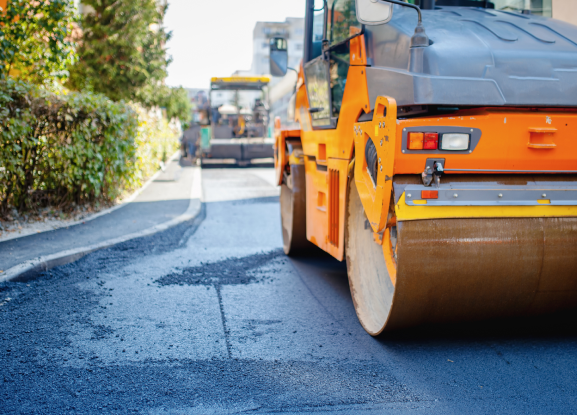 The FHWA defines rutting as a longitudinal surface depression in the wheel path. On a lot, ruts tend to show at entrances, along drive lanes and where heavy vehicles turn and stop.
Heat plays a part as well. Long, hot summers soften the binder that holds a surface together, so the first marks often show where trucks and trailers stand rather than where cars drive over. With 86 days a year at 90 degrees or above, Hammond gives that softening plenty of time.
Loose Stone and a Gray Surface: A Sign the Binder Is Wearing Away
Raveling is the FHWA’s term for the surface wearing away as stone particles come loose and asphalt binder is lost. It ranges from a loss of fines to a rough, pitted surface.
Raveling on its own is usually a job for seal coating, as long as the base under it is sound. A coat puts a protective layer over the asphalt, so sun, water and spilled fuel or oil reach the coat instead of the surface underneath.
Block Cracking Across Older Pavement: A Sign the Asphalt Itself Has Aged
The FHWA describes block cracking as a pattern that divides the pavement into roughly rectangular pieces, from about 0.1 to 10 square meters each. Its definition, unlike the one for fatigue cracking, is not tied to the wheel paths.
So when rectangles show up across parking bays that see little traffic, the age of the asphalt is the more likely cause. That usually calls for crack sealing and a surface treatment before it calls for a rebuild.
Water Signs That Point Below the Surface
Some of the most telling signs only show up during or right after rain. In Hammond, that is often, so these are worth checking on the next wet day.
Stains Around Cracks After Rain: A Sign Water Is Pumping From the Base
The FHWA manual describes water bleeding and pumping as water seeping or being forced up from beneath the pavement through cracks. It can leave deposits of fine material on the surface, washed up from the layers below.
If you see light, muddy staining around cracks after a storm, the base is losing material. On Guyton soil with a high winter water table, that is worth dealing with before the next wet season.
Potholes After the Wet Months: A Sign Water Reached the Base
The FHWA defines potholes as bowl-shaped holes in the surface, with a minimum size of 150 millimeters, or about 6 inches across.
A pothole usually starts as a crack that was left alone. Water works down through it, the base softens and loses strength, and traffic breaks the surface apart once the support is gone.
Puddles That Stay in the Same Spots: A Sign the Levels Have Changed
A puddle that is still there a day after rain, in the same place every time, means that part of the lot is no longer shedding water. Often the base below it has settled, or the surface was never graded to drain.
That standing water keeps soaking into whatever is underneath.
After a heavy rain, walk the lot once the storm has passed and note where water is still standing. Photos of the same spots over a few storms show whether the problem is spreading, which helps when you decide what to fix first. Our guide to dealing with common asphalt problems like potholes and cracks covers the general repair choices.
Clogged Drains and Ditches at the Edges
Where a lot drains to a ditch or storm drain, that outlet has to stay open. A blocked inlet on your own lot is worth clearing before a storm arrives, not after the water has already backed up. The City of Hammond’s Streets Department, which runs the city’s stormwater management plan, asks residents to help keep ditches and storm drains clear of obstructions.
The same city page asks people not to dump used motor oil on the ground. On a lot, oil spots are also a surface problem, which is why oil patches are treated before any coat goes on.
Why Hammond Lots Are Especially Hard on Asphalt
Hammond’s mix of soil, weather and housing puts more strain on shared parking than many places.
The Census Bureau’s American Community Survey for 2020 to 2024 counts about 9,855 housing units in Hammond. Only about 55.8 percent are single-family detached homes, and 54.0 percent of occupied homes are rented, so a large share of residents live in housing types where parking is often shared.
The city has also added a lot of housing recently. About 28.7 percent of Hammond’s homes were built in 2000 or later, while the median home dates to 1984, so newer lots sit alongside much older ones.
For why owners choose asphalt for that kind of shared parking in the first place, see our post on why asphalt suits commercial property.
| Factor | Effect on the Lot | What Helps |
|---|---|---|
| Guyton and Abita silt loams | Soil rated for low strength sits under the base, with water 0 to 1.5 feet down from December to May | Rebuild failed areas from the base up, since a patch on top will not hold |
| 86 days a year at 90 degrees or more | Softened binder marks first where trucks and trailers stand | Watch loading and parking areas, and repair ruts before they hold water |
| 64.17 inches of rain a year | Water finds every open crack, with about 20 days a year bringing an inch or more | Seal cracks while they are still single lines |
| Shared parking for many households | Drive aisles and entrances take traffic all day | Repair in sections so part of the lot stays open |
The cold months are also the wet months for the ground. December through May is when the Guyton water table sits highest, so damage that starts in winter has wet soil under it. For more on how heat and rain work on pavement, see our post on how New Orleans weather affects asphalt.
Protect Your Hammond Lot Before Repairs Turn Into Replacement
Before we recommend anything, we look at the whole lot, not just the worst corner. The damage you can see shows where water has been going, and the surface around it shows how far it has traveled.
Most lot problems start small. A single crack is a sealing job, a worn gray surface is a coating job, and an isolated soft area is a repair, as long as each is caught before water reaches the base.
Once cracking joins into a web across the drive lanes, or the same areas pond after every storm, patching the top only holds for so long. Our asphalt repair work cuts failed areas back to sound asphalt and rebuilds the base before new material goes down.
On a lot that has to stay open, we work in sections so part of the surface stays available throughout. You get the plan, the dates and the scope in writing before anything starts, with a free written estimate.
At TurnKey Asphalt, we would rather tell you a surface has years left in it than sell you more work than it needs. Our Hammond asphalt service page covers driveways, parking lots and roadways across the city.
To have your Hammond parking lot looked at, call us at (504) 576-9561.
Frequently Asked Questions
What soil is under most of Hammond?
The USDA soil survey maps most of Hammond as silt loam, with about 63 percent of the land in Guyton map units and about 26 percent in Abita silt loam by our count. Guyton soils are poorly drained and slowly permeable, and the USDA rates them “very limited” for local roads and streets.
Why do Hammond parking lots get worse in winter and spring?
The USDA puts the Guyton seasonal high water table at 0 to 1.5 feet below the surface from December through May. Wet soil under the base gives the pavement less support during those months.
What does alligator cracking on a parking lot mean?
The FHWA calls it fatigue cracking, found where traffic loads repeat, such as wheel paths. Connected cracks like these usually mean the layer beneath the surface is moving, which calls for a repair.
What causes ruts in a parking lot?
Rutting is a depression along the wheel path. In hot weather, softened asphalt marks first where heavy vehicles stand, which is why we check loading and parking areas closely.
Can seal coating fix a cracked or rutted lot?
No. Seal coating protects a surface that is still sound, and it adds no strength and carries no load. Cracks are filled first, and ruts or failed areas need repair before any coat goes on.
How cold does it get in Hammond?
NOAA’s 1991 to 2020 normals for the Hammond 5 E station show an average of 31.4 nights a year at or below freezing. The New Orleans International Airport station averages 5.4.
What is that muddy staining around cracks after rain?
The FHWA describes it as water bleeding and pumping, where water is forced up through cracks and leaves fine material from the layers below on the surface. It means the base is losing material and should be looked at before the next wet season.
Can a parking lot stay open during repairs?
Usually, yes. We work in sections on lots that have to stay open, so part of the surface stays available while the rest is repaired. You get which parts close, and on which days, before the crew arrives.