

Baton Rouge averages 96.4 days a year with a high of 90 degrees or more, based on NOAA’s 1991 to 2020 normals for the Baton Rouge Metro Airport. The New Orleans International Airport station averages 85.2.
Those extra hot days land on a material that gets softer as it gets hotter. Asphalt is held together by a binder that stiffens in the cold and loosens in the heat, and a driveway in full sun runs well above the air temperature.
At TurnKey Asphalt, we look first at whether the damage on a driveway is a surface that needs protecting or a base that needs repair.
If your driveway has scuffs, soft spots or a gray, gritty surface, contact us and we will tell you what the signs mean.
This guide covers how hot Baton Rouge gets, the warning signs heat and sun leave on a driveway, and why the local ground and housing make those signs common.
How Hot Does It Get on a Baton Rouge Driveway?
Hotter than New Orleans, for longer, and hotter again at the surface than on the thermometer.
More 90-Degree Days Than New Orleans
The NOAA normals put Baton Rouge at 96.4 days a year at 90 degrees or above, about 11 more than New Orleans International Airport. Of those, 69.5 fall in June, July and August, a season with only 92 days in it.
In other words, three summer days in four reach 90 degrees in a normal year. The average summer high is 91.5 degrees.
The Pavement Runs Hotter Than the Air
Asphalt binders are graded by the temperature of the pavement, not the air. The Asphalt Pavement Handbook explains that a common grade, PG 64-22, is meant for places where the average 7-day maximum pavement temperature reaches 64 degrees Celsius, or 147 degrees Fahrenheit.
That number is far above any air temperature in Louisiana. It tells you how much hotter a dark surface in full sun gets, and why the binder in it has to be chosen for heat.
For a homeowner, the practical point is that the mix matters as much as the weather. Our paving page puts it this way: the right mix follows the use, the traffic and the season, and choosing it is our job.
A Long Season, Not a Few Bad Days
The monthly normals show the heat building from late spring. Average highs reach 85.8 degrees in May, run above 90 from June through August, and are still 88.7 in September.
NOAA’s normals add 18.4 more 90-degree days in the fall and 8.5 in the spring. A Baton Rouge driveway spends close to five months of the year working in high heat.
That matters for planning. Summer is when heat marks appear, and it is also when a new surface is most easily marked in its first days, so the timing of new work and the care that follows it both count.
Warning Signs Heat Is Softening Your Driveway
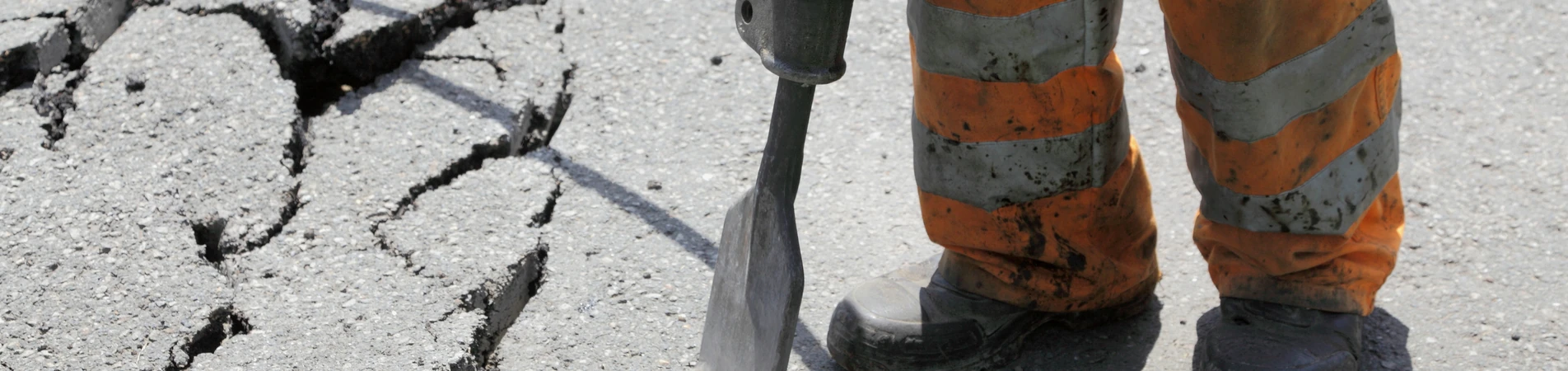
Heat damage shows up where tires turn and where weight sits still. The Federal Highway Administration’s Distress Identification Manual gives names to several of these, and they are useful when you describe the problem to a contractor.
None of these signs means on its own that a driveway has failed. What they tell you is where the surface is under the most stress, and whether that stress has reached the layers underneath.
Scuffs Where Tires Turn: A Sign the Surface Was Still Soft
Curved scuffs near the garage or at the turn into the street usually show where wheels were turned on a surface that was too soft to resist them.
Our paving page notes that turning wheels on a mat that has not finished cooling leaves scuffs that stay. On a new driveway, that is the main reason to keep traffic off until we say it is ready, especially in summer.
On an older driveway, scuffs on their own are mostly cosmetic. What matters is whether the asphalt around them is still firm underfoot and holds its shape under a vehicle.
Shiny, Sticky Patches: A Sign of Bleeding
The FHWA describes bleeding as excess binder on the surface, usually in the wheel paths. It can range from a darker, discolored patch to a shiny, glass-like surface that may be tacky to the touch.
The manual treats bleeding as a sign of a possible mix problem instead of ordinary wear. On a hot afternoon, it is the dark, glossy strip you can sometimes see where tires run every day.
Dents Where Weight Stands Still: A Sign the Binder Has Softened
Our maintenance page puts it simply: long, hot summers soften the binder, and a softened surface deforms under standing weight. The first marks show where heavy weight stands still rather than where traffic passes over.
On a driveway, look under the spot where a heavy vehicle parks every night, and anywhere a trailer, boat or dumpster has stood for days. A shallow dent there is the heat and the load working together.
If the dent starts holding water after rain, it has gone past a heat mark. Our repair page notes that a dip that holds water after rain is usually a base problem showing up at the surface.
Pushed-Up Edges at the Turn-In: A Sign of Shoving
The FHWA defines shoving as a localized area of the surface pushed sideways, generally caused by braking or accelerating vehicles. It usually appears on curves, hills or at intersections.
On a home driveway, that means the apron where cars brake and turn in from the street. A wave or a raised lip there shows the surface moving under the tires.
If you notice it, keep an eye on whether it grows from one summer to the next. That history helps us judge whether the area needs a repair or just watching.
Signs Sun and Age Are Wearing the Surface Out
Heat softens the surface in summer. Years of sun do something slower, drying the binder until the surface stops holding together.
A Gray Surface Shedding Grit
Our repair page describes raveling as the loose grit you sweep off a driveway that has lost its binder, most often to sun and age. A driveway that has faded from black to gray is usually on its way there.
On its own, that is a case for seal coating rather than repair. A coat goes over a surface that is still structurally sound, and catching it at the gray stage is the difference between a coat and a repave.
Cracks That Start as Hairlines
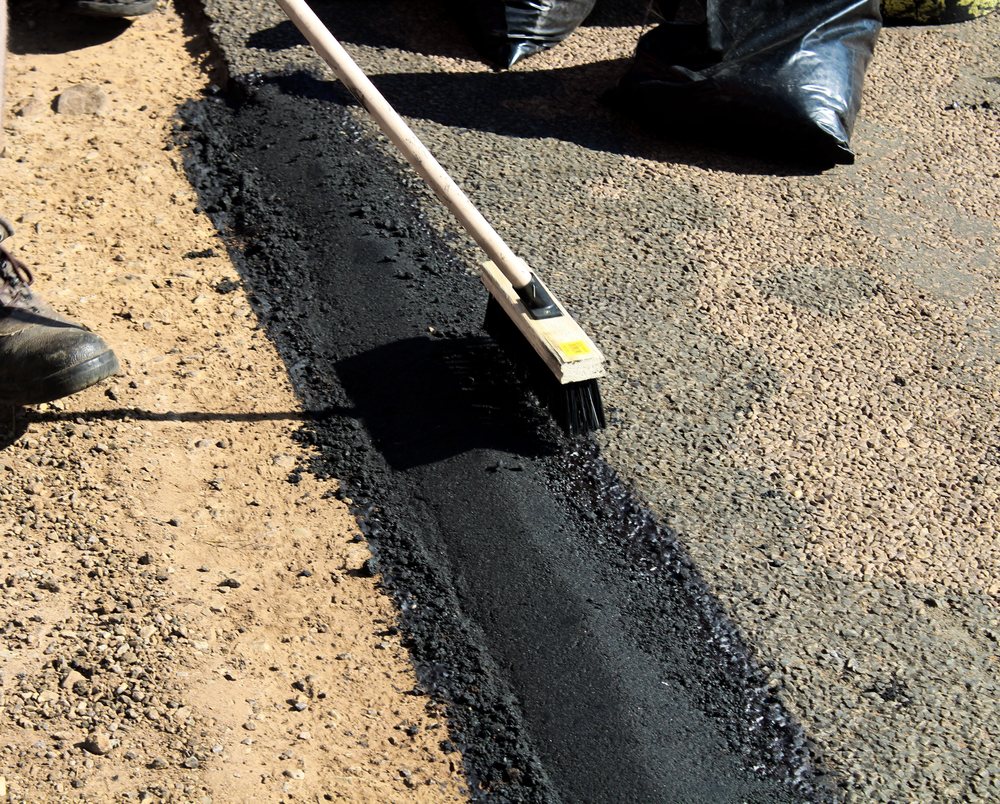 A dried-out surface cracks more easily, and each crack is an opening for the next rain. Our maintenance page says that a crack sealed while it is narrow stays a line, while one left open widens and lets the damage spread beneath it.
That is why crack filling belongs in summer and fall upkeep, before the wet winter months covered below.
Sealing has limits, though. Our repair page says that once separate cracks start joining into a connected pattern, the surface is telling you the layer beneath it is moving, and a sealant will not change that.
Driveways From the 1960s to the 1980s
Census data for 2020 to 2024 shows that about 49.7 percent of Baton Rouge’s 106,712 housing units were built between 1960 and 1989. About 54.7 percent are single-family detached homes.
Many of the driveways beside those homes have been resurfaced or patched since, but some have had decades of sun on them. A surface that old is more likely to be gray, brittle and cracked than soft.
If your home falls in that age range, it is worth finding out when the driveway was last resurfaced or coated. A surface that has been looked after over the years is in a very different place from one that has had nothing done since it was laid.
Why Baton Rouge Is Especially Hard on Asphalt Driveways
Heat is only part of it. Baton Rouge also sits on silty ground that stays wet near the surface in winter, so the same driveway can be soft from heat in August and sitting over wet soil in February.
The table below sets out the main local factors, what each one does to a driveway, and what helps.
| Factor | Effect on the Driveway | What Helps |
|---|---|---|
| 96.4 days a year at 90 F or more | Softens the binder, so turning tires scuff and parked weight leaves dents | Keeping traffic off new asphalt until it is ready, and moving heavy loads that stand for days |
| Years of full sun | Dries the binder until the surface turns gray and sheds grit | Seal coating while the surface is still sound |
| Wet silty ground in winter | Weakens the base under a crack once rain gets through | Sealing cracks before the winter rain and keeping water moving off the surface |
| Little or no shade | Leaves the surface at its hottest for the longest part of the day | Shade trees planted at a safe distance from the pavement |
The soil row comes from the USDA’s soil survey for East Baton Rouge Parish, which we ran against the Census boundary for the city. Oprairie silt is the most common soil, at about 26 percent of the area, and the USDA describes it as a somewhat poorly drained soil formed in loess on old upland terraces.
About 11 percent is mapped as a Deerford-Verdun complex. The Deerford description puts a perched water table 0.5 to 1.5 feet below the surface from December through April, and the survey rates both soils “very limited” for local roads.
The shade row comes from the LSU AgCenter. Horticulturist Heather Kirk-Ballard writes that shade trees shade roadways and that shaded roadways can help save up to 60 percent of repaving costs. The same article warns against planting too close to a pavement, so the tree has to be placed with its roots in mind.
Put together, the table explains why the order of the work matters. Cracks sealed in the dry months keep the winter water out of the base, and a coat over a sound surface slows the drying that heat and sun cause.
For a broader look at how sun, rain and temperature work on asphalt, see our guide to how weather affects asphalt and what you can do about it.
Protect Your Baton Rouge Driveway Before Next Summer
The heat is not going anywhere, and the signs it leaves are easier to deal with early. Scuffs and dents on a sound driveway are a surface matter, and a gray surface is still a coat, not a repave.
The work that keeps it that way is ordinary: sealing cracks while they are lines, coating the surface when it turns gray, and keeping water moving off it. Our asphalt maintenance page sets out how that upkeep works, and our guide to how often asphalt needs maintenance covers the timing.
If you are weighing a coat against a new layer, our comparison of sealcoating vs. resurfacing vs. repaving lays out the difference.
At TurnKey Asphalt, we will look at your driveway and tell you plainly whether it needs a coat, a repair or more. Every project comes with a free written estimate, and our Baton Rouge asphalt service page lists everything we do in the area.
To have your Baton Rouge driveway looked at, call us at (504) 576-9561.
Frequently Asked Questions
How hot does it get in Baton Rouge?
NOAA’s 1991 to 2020 normals for the Baton Rouge Metro Airport show 96.4 days a year with a high of 90 degrees or more. The average summer high is 91.5 degrees.
Is Baton Rouge hotter than New Orleans for asphalt?
By that measure, yes. New Orleans International Airport averages 85.2 days a year at 90 degrees or more, about 11 fewer than Baton Rouge. Most of the difference comes in summer and early fall.
Why does my asphalt driveway feel soft in the summer?
Asphalt is held together by a binder that softens as it heats, and a dark surface in full sun runs far hotter than the air. A softened surface can dent under weight that stands still and scuff where tires turn. Baton Rouge’s long run of 90-degree days gives that softening plenty of time.
What causes black, shiny patches on my driveway?
The FHWA calls this bleeding: excess binder on the surface, usually in the wheel paths, that can look glossy and feel tacky. It points to a possible mix problem, not normal wear, so it is worth having looked at. A coat of sealer over a bleeding surface does not solve the cause.
Why are there tire marks on my new driveway?
New asphalt needs time to cool and firm up before it takes traffic. Turning wheels on a surface that has not finished cooling leaves scuffs that stay, which is why we tell you on site when a new driveway can be used.
When should I sealcoat a driveway in Baton Rouge?
Seal coating goes on a surface that is still structurally sound, once it starts to turn gray or shed grit. It does not go on a mat that is only weeks old, and it will not fix a failing base. Our Baton Rouge service page describes seal coating on the two to five year interval the sources give, checked against the condition of the surface itself.
Does shade help an asphalt driveway?
The LSU AgCenter says shade trees shade roadways and that shaded roadways can help save up to 60 percent of repaving costs. It also advises against planting too close to pavement, so place trees with their roots in mind.
Does Baton Rouge soil affect asphalt driveways?
Yes, mostly in winter. The USDA maps much of the city as silty soils that stay wet near the surface from about December through April, so cracks left open let water weaken the base during the wettest months. Sealing them in the dry season is the simplest protection.