Asphalt paving is considered one of the smartest, eco-friendly choices for residential driveways because it is the most recycled material in the United States, with over 80% to 99% of reclaimed asphalt pavement (RAP) being reused in new projects. It offers a sustainable, durable, and cost-effective alternative to concrete, requiring less energy for production and providing long-lasting performance.
Eco-friendly home improvements go well beyond solar panels and energy-efficient windows. The surface under your feet matters too. Eco-friendly asphalt paving has earned a serious place in green home design, and for good reason.
At TurnKey Asphalt, we help New Orleans area homeowners make paving decisions that work for their property and the planet. From recycled materials to stormwater control, asphalt checks a lot of boxes that homeowners focused on sustainability care about.
Contact us today to find out what the right asphalt solution looks like for your home.
Is Asphalt Paving Really Eco-Friendly?
 Yes, and it outperforms most people’s expectations. Asphalt is the most recycled material in the United States, ahead of aluminum cans and newspapers. The National Asphalt Pavement Association (NAPA) confirms it is 100% reusable, with approximately 94% of reclaimed material going directly into new pavement layers rather than landfills.
For homeowners working to reduce their environmental footprint, that statistic matters. Choosing asphalt for a driveway, walkway, or patio means opting into a circular economy where material is reclaimed and reused rather than discarded. Asphalt is not just a durable surface. It is a genuinely greener choice.
How Does Recycled Asphalt Reduce Environmental Impact?
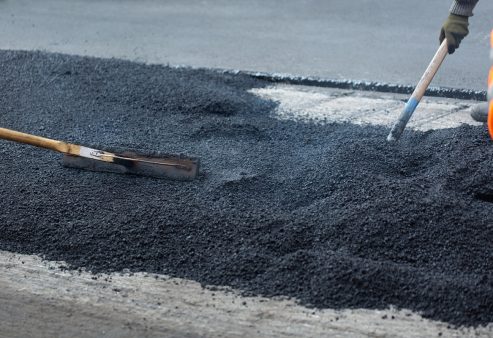
Reclaimed Asphalt Pavement (RAP) is the foundation of sustainable paving. Old asphalt surfaces are milled, processed, and reintroduced into new pavement mixes. The output performs just as well as, and sometimes better than, virgin asphalt at a lower environmental and financial cost.
According to the 2019 NAPA/FHWA industry survey, contractors reclaimed 97 million tons of RAP that year, with 89.2 million tons going directly into new asphalt pavements alongside roughly 921,000 tons of Reclaimed Asphalt Shingles (RAS). That reclamation effort kept nearly 60 million cubic yards of material out of landfills.
What RAP Means for Homeowners
For eco-friendly homeowners, choosing a contractor who uses RAP delivers measurable benefits:
- Less quarrying and extraction from natural environments
- Reduced landfill waste from old driveways and parking surfaces
- Lower carbon emissions tied to producing and hauling virgin materials
- Shorter supply chains since local reclaimed material is often sourced nearby
Working with a contractor who follows material efficiency best practices ensures your project carries the smallest footprint possible.
What Is Warm Mix Asphalt and Why Does It Matter?
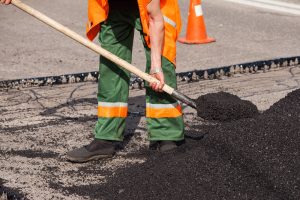
Warm Mix Asphalt (WMA) is produced at temperatures 20 to 40 degrees Fahrenheit lower than traditional Hot Mix Asphalt (HMA). That temperature gap creates real environmental savings across every stage of production and transport.
WMA works with RAP, so recycled content is still incorporated at scale. The EPA’s ENERGY STAR program, in active partnership with NAPA, promotes warm-mix production as part of its sustainable paving framework.
 Environmental Benefits of Lower Production Temperatures
The efficiency gains from WMA are direct and measurable:
- Reduced energy use at the plant and throughout transport
- Fewer greenhouse gas emissions released during production
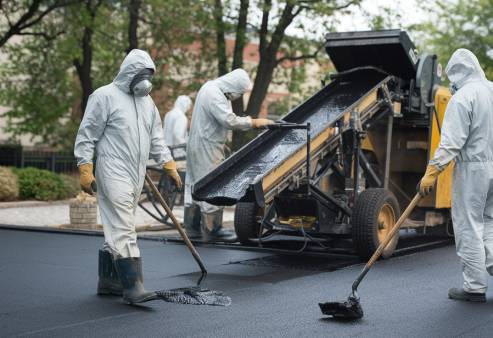
- Better working conditions for crews due to lower fume exposure
- Longer haul capability without quality loss, cutting logistics emissions
For homeowners who want a greener driveway without compromising performance, WMA is worth asking your contractor about before your next project.
Can Permeable Asphalt Help Manage Stormwater?
Yes, and it is one of the most practical sustainability features available for residential paving. Porous asphalt, also called permeable pavement, allows rainwater to pass through the surface and filter naturally into the ground below. The Environmental Protection Agency (EPA) has officially recognized porous asphalt as a best management practice for stormwater control.
In Greater New Orleans, where heavy rainfall is common and drainage systems are under strain, this matters. A standard driveway sheds water directly into those systems. A porous asphalt surface filters it underground instead.
Why This Matters for New Orleans Properties
For homeowners in high-rainfall areas, porous asphalt delivers practical, green advantages:
- Reduced surface flooding during heavy rain events
- Groundwater recharge for local aquifers and ecosystems
- Lower runoff pollution since water filters through aggregate before reaching waterways
- Stormwater compliance support for properties under local drainage requirements
Porous asphalt works in driveways, walkways, parking pads, and patios. Regular asphalt maintenance inspections keep permeable surfaces clear and performing well over time.
How Does Asphalt Maintenance Reduce Waste Over Time?
Asphalt’s greatest sustainability advantage may be its repairability. When damage appears, there is no need to tear out and replace the whole surface. Crack filling, patching, and resurfacing extend the life of the original installation with far less material consumed.
The Role of Sealcoating in Long-Term Sustainability
Sealcoating is applied every two to three years to shield asphalt from UV radiation, water infiltration, and surface oxidation. That protection pushes back the need for full replacement, which means fewer raw materials used and less construction waste generated across the life of your driveway.
Asphalt vs. Concrete: A Lifecycle Comparison
| Maintenance Action |
Asphalt |
Concrete |
| Crack repair |
Fast, affordable |
Difficult, costly |
| Resurfacing without full replacement |
Yes |
Limited |
| Recyclability at end of life |
100% |
Partial |
| Typical lifespan with maintenance |
20-30+ years |
25-50 years |
This lifecycle advantage gives asphalt a strong position under green building frameworks like LEED (Leadership in Energy and Environmental Design), which weighs recycled content, stormwater management, and material longevity.
Is Asphalt More Sustainable Than Concrete?
In most residential situations, yes. Both materials carry environmental tradeoffs, but asphalt holds several clear advantages for homeowners prioritizing sustainability.
Carbon Footprint: Asphalt Leads
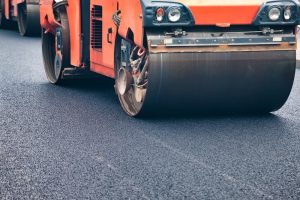 Asphalt produces fewer greenhouse gas emissions during production than concrete. Its binder comes from petroleum byproducts that were never burned as fuel, locking that carbon out of the atmosphere rather than releasing it. Concrete manufacturing, by comparison, requires intense heat and generates substantially more carbon per ton of material.
Smooth Asphalt Improves Fuel Efficiency
Research from the Federal Highway Administration (FHWA) found that smoother pavement surfaces reduce vehicle fuel consumption by approximately 4.5%. Well-maintained asphalt driveways contribute to that effect at the neighborhood level, adding up to a meaningful reduction in cumulative vehicle emissions.
Make the Greener Paving Choice for Your Home
For homeowners choosing based on sustainability, asphalt is the stronger material. Ready to start? Get a free estimate from TurnKey Asphalt and our team will walk you through the best option for your property.
We serve New Orleans and the surrounding area, including Metairie, Kenner, Mandeville, Slidell, and Baton Rouge. Call us at (504) 576-9561 to schedule your free consultation.
Frequently Asked Questions
Is asphalt actually eco-friendly?
Yes. Asphalt is the most recycled material in the U.S., more than aluminum or glass. Around 94% of reclaimed asphalt pavement gets reused in new surfaces. When maintained and recycled at end of life, it functions within a true circular economy.
What is Reclaimed Asphalt Pavement (RAP)?
Reclaimed Asphalt Pavement (RAP) is asphalt milled from old roads, driveways, or parking lots and reprocessed for use in new pavement mixes. It performs comparably to virgin asphalt while significantly reducing demand for raw materials and reducing landfill burden.
Does asphalt contribute to stormwater pollution?
Standard asphalt increases surface runoff, but porous asphalt is engineered specifically to counteract this. It filters rainwater through the surface and into the ground below, reducing flooding and supporting groundwater recharge, an approach formally endorsed by the EPA.
How does sealcoating support sustainability?
Sealcoating protects asphalt from sun, water, and surface wear, extending the pavement’s life by years. A longer-lasting driveway means fewer full replacements over time, less material consumed, and less construction waste entering the waste stream.
Is asphalt better than concrete for eco-conscious homeowners?
In most residential applications, yes. Asphalt has a lower carbon footprint during production, is 100% recyclable, and contributes to vehicle fuel efficiency through smooth surfaces. Concrete produces more emissions and offers limited recyclability in comparison.
Can asphalt paving support green building certifications?
Yes. Asphalt can contribute to LEED points in categories including stormwater management, recycled content, and heat island reduction, particularly when permeable or RAP-based mixes are used.
How long does an eco-friendly asphalt driveway last?
With proper installation and regular maintenance, including sealcoating every two to three years and prompt crack repair, an asphalt driveway can last 20 to 30 years or more. That longevity is a core part of what makes it a low-waste paving choice.



 By TurnKey Asphalt
  Mar 10, 2026