Cracking That Has Connected
Cracks that have joined into a pattern rather than staying as separate lines.
 (504) 576-9561
Experienced Professionals Delivering High-Quality Asphalt Services


Call Us Today!
New Orleans metro
Tell us the surface and the square footage and the job gets priced properly instead of guessed at. We are fully licensed, bonded, and insured.
A surface needs replacing when the failure has stopped being local: when cracking has joined into a web across large areas, when the surface moves under a loaded vehicle, or when patches laid over patches are failing again. Until then, a repair is the cheaper and less disruptive answer, and we will say so.
Cracks that have joined into a pattern rather than staying as separate lines.
Ground that gives or feels soft when weight crosses it, rather than holding its shape.
Water sitting in the same places after every rain, which means the levels are no longer moving it.
Work that has been done and has failed again in the same spot. Any one of these may still be a repair; several together usually is not.
Any one of those on its own may still be a repair. Several of them together usually is not, and laying new material over a base that has failed puts a good surface on a bad foundation.
A replacement is four pieces of work in order: the old surface is broken out and hauled away, the ground beneath is checked and rebuilt where it has failed, a compacted base is restored, and new asphalt is laid and compacted hot. The demolition and removal is the part that separates this from paving, and it is where much of the extra cost sits.
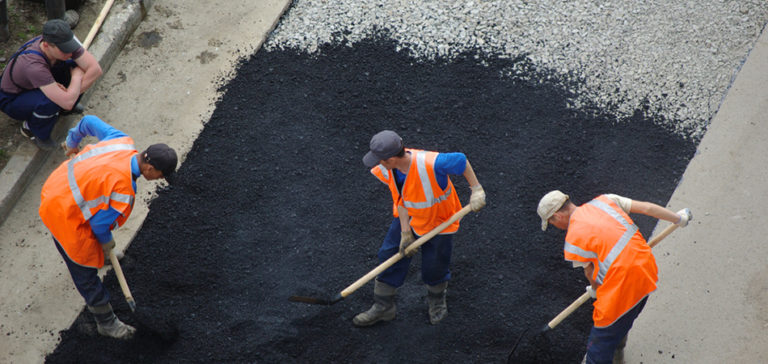
The failed material is broken up and removed from site rather than buried under the new work. What comes out tells us how deep the problem went, which we could only estimate before.
Soft, washed-out or settled ground is dug out and rebuilt. If we leave it, the new surface inherits the same failure and you are back here sooner than you should be.
Stone is laid and compacted in layers to carry the load the surface will take. Levels are set here, so this is where drainage is decided.
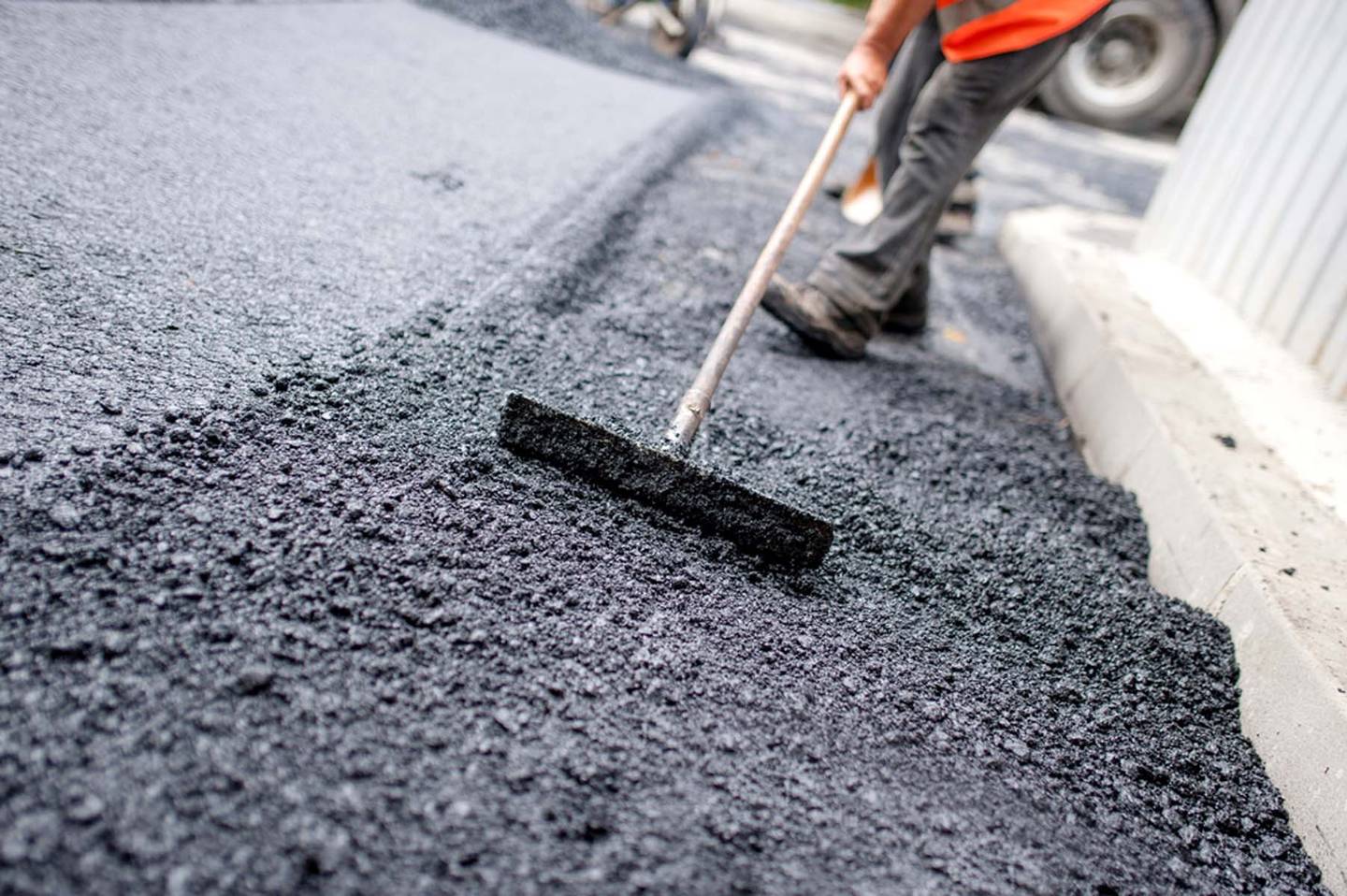
The new mat goes down at the depth the use calls for and is rolled while it is hot. Edges and joints are worked so water has no opening at the perimeter.
The schedule is set by the site rather than by the square footage, so we give you a plan before we start rather than a number now. Access, how much ground has to be rebuilt, how much of the area can close at once and the weather all move it.
The old surface has to come out before anything new can go down, and what is found underneath can change the plan. We tell you if it does, on the day it does.
On a commercial lot we work in sections so part of the surface stays available throughout.
Which parts close, on which days, and what has to be moved off the area before the crew arrives.
The price moves with the measured area, the depth of material coming out, how much of the ground beneath has to be rebuilt, access for our equipment, and how much of the surface can be closed at once. We do not publish a price per square foot, because two surfaces of the same size can need very different work below them.
The old surface has to be broken out and taken away, which paving does not involve at all.
How much of what sits under the asphalt has to be dug out and rebuilt before anything new goes down.
A car park and a lot carrying loaded vehicles are not built the same way, and the depth follows the traffic.
What our equipment can reach and what we carry in, and whether we work in sections around a business that stays open.
All of it goes to you in writing before anything starts, at no cost. If the surface could be kept and paved over instead, the estimate will say that, because that is the cheaper job and we would rather you had the choice.
A new surface asks very little in its early years, and the work it does ask for is small and cheap compared with the one you have just paid for. Our asphalt maintenance page covers the routine, and seal coating covers the protective coat and when a surface is ready for one.
Water that leaves the surface cannot get under it, and the levels and drainage lines are what decide whether it does.
A single crack is a sealing job. Left as a mark it branches, reaches the base, and becomes a repair.
We replace asphalt across the New Orleans metro, and each area we cover has a page of its own with the local detail on it. If your property sits on the edge of these areas, call us and we will tell you plainly whether it is in range.
New Orleans, Metairie, Kenner, Gretna, Harahan and River Ridge, across Orleans and Jefferson Parish.
Slidell, Covington, Mandeville and Madisonville, across St. Tammany Parish.
St. Rose, LaPlace, Hammond and Baton Rouge, across St. Charles, St. John the Baptist, Tangipahoa and East Baton Rouge Parish.
Two claims repeated across the paving trade do not survive a reading of the source documents.
Asphalt does not have a cure time. It gains full strength on cooling and can typically support traffic within minutes of construction, and hours only in rare cases depending on lift thickness and ambient conditions. A newly built two inch surface is generally a few minutes.
The association guidance still recommends waiting a few days before opening a new residential driveway, and keeping a heavy moving truck off a fresh mat. That is best practice advice about protecting a new surface, not a curing requirement.
The minimum is set by lift thickness and mix type in the governing specification. Colorado DOT Table 401-3 sets 60 F for a top layer under 1.5 inches, 50 F from 1.5 to under 3 inches, and 45 F at 3 inches or more. Tennessee DOT Table 407.09-1 as revised 12-27-23 sets 45 F unmodified and 55 F modified under 2.0 inches, and 35 F at 2.0 inches or more. Neither of those is Louisiana's specification.
A well designed low traffic pavement should not require sealing for approximately 2 to 5 years, and the association guidance is not to apply sealer until the driveway is at least several months old.
Widely repeated, but every page carrying it was a paving company's own marketing or a content site, and the Asphalt Institute contradicts the framing outright. It does not appear on this page.
Repeated as a flat rule. The two state specifications read in full show the minimum is thickness and mix dependent, and those two specifications do not even agree with each other.
Pick the one that matches your surface instead of reading one page written for all of them.
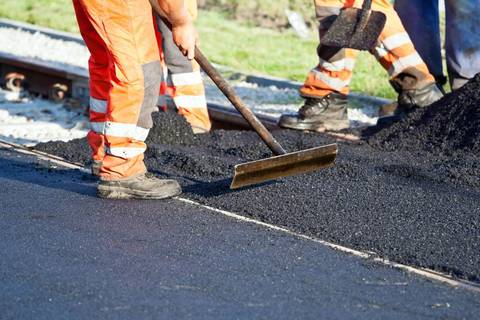
Bare ground to finished surface. The base is built and compacted first, and how well that is done decides more about the next twenty years than the mix laid over the top of it.
See installation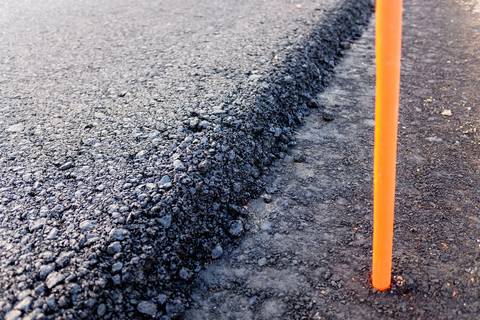
Crack filling and routine upkeep on a surface that has not failed. It is the one service on this list you call about before anything is wrong, and it is what keeps the other five further away.
See maintenance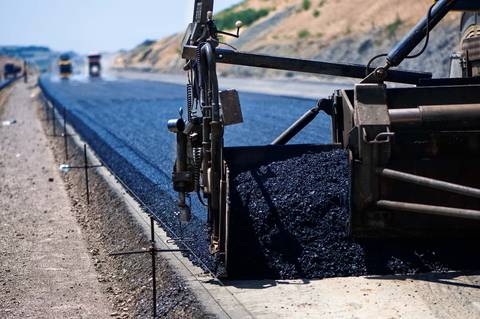
Driveways, parking lots and roadways, with the mix matched to the traffic the surface actually carries, whether that is over a new base or over a surface sound enough to keep.
See paving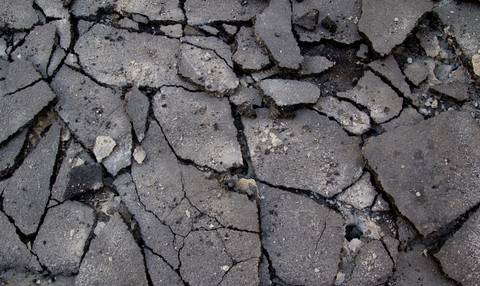
Potholes, splits and patches that have let go, dealt with in place. The moment water gets past them and reaches the base underneath, a repair stops being a repair and turns into a repave.
See repair
A coat over a surface that is still structurally sound, on the two to five year interval the sources give. It will not rescue a failing base, and it does not go on a mat that is only weeks old.
See seal coating
Tell us the surface and the square footage, and the job gets priced properly instead of guessed at.
Residential drives across the New Orleans metro, measured and quoted on the surface you actually have.
Commercial lots, surfaced and graded so water leaves them, then kept that way.
Each area has its own page, written from its own facts. The service areas page goes straight to any of them.